
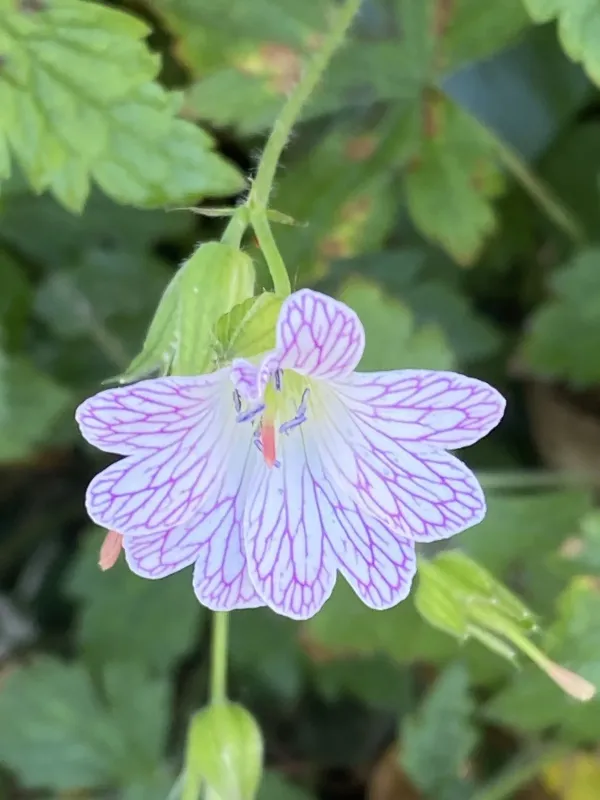
Pencilled geranium
Geranium versicolor L.
Description
Sowing dates
Geranium versicolor, a member of the Geraniaceae family, is commonly propagated through seed dispersal or vegetative division. Seeds are best sown in late autumn to benefit from natural winter stratification, which improves germination success in the spring.
When starting from seed in a controlled environment, sowing should occur in early spring using a well-draining seed-starting mix. Seeds typically require moderate temperatures and consistent moisture to break dormancy and emerge successfully.
Division is the preferred commercial and garden propagation method. By dividing the rhizomes in early spring or late summer, gardeners can ensure the plant establishes quickly and retains the specific characteristics of the parent plant.
When transplanting, divisions should be spaced approximately 30 to 40 centimeters apart. This spacing allows for proper air circulation and reduces the risk of overcrowding, which can otherwise impede growth and flowering.
Once established, the plant shows strong vigor. Proper spacing ensures that the foliage forms an effective ground cover, which naturally suppresses weed growth and maintains soil moisture levels in the garden bed.
Growing requirements
Native to the mountainous regions of Southern Europe, Geranium versicolor is well-adapted to temperate climates. It thrives in partially shaded areas but can tolerate full sun provided the soil remains consistently moist.
The plant requires fertile, humus-rich, and well-draining soil. It is critical to avoid waterlogged conditions, as the rhizomatous root system is prone to decay if soil drainage is insufficient during the dormant or growing season.
In terms of climate, it is a hardy perennial that typically does not require winter protection. It thrives in temperate zones and maintains its aesthetic appeal throughout the majority of the growing season with minimal intervention.
Watering should be managed to keep the soil slightly moist but never saturated. During hot summer months, increased irrigation is necessary to prevent the leaves from wilting and to sustain the plant’s decorative blooming potential.
Maintenance involves light pruning to remove old or damaged foliage. This practice not only keeps the plant tidy but also stimulates new growth and helps prevent the buildup of stagnant organic matter around the base.
Main diseases and pests
The most frequent health issue for this plant is powdery mildew, which appears as a white, dusty coating on the leaves. This usually occurs when humidity levels are high and air circulation around the plants is poor.
Root rot is a major threat caused by poor drainage and excessive irrigation. If the soil remains soggy for extended periods, the plant’s rhizomes will soften and decay, necessitating immediate action to improve drainage.
Pests such as aphids and spider mites may occasionally infest the foliage, particularly during dry, hot weather. These pests suck nutrients from the leaves, causing them to yellow or appear stippled, which reduces the plant's health.
Slugs and snails are common garden pests that may consume young foliage, especially in moist and cool environments. Implementing barriers or using biological controls can help manage these pests effectively without using harsh chemicals.
Regular monitoring and good cultural practices are essential for disease management. By providing the correct soil conditions and ensuring adequate plant spacing, the risk of disease and pest infestation is significantly reduced.