
Wlassov's cranesbill
Geranium wlassovianum Fisch. ex Link
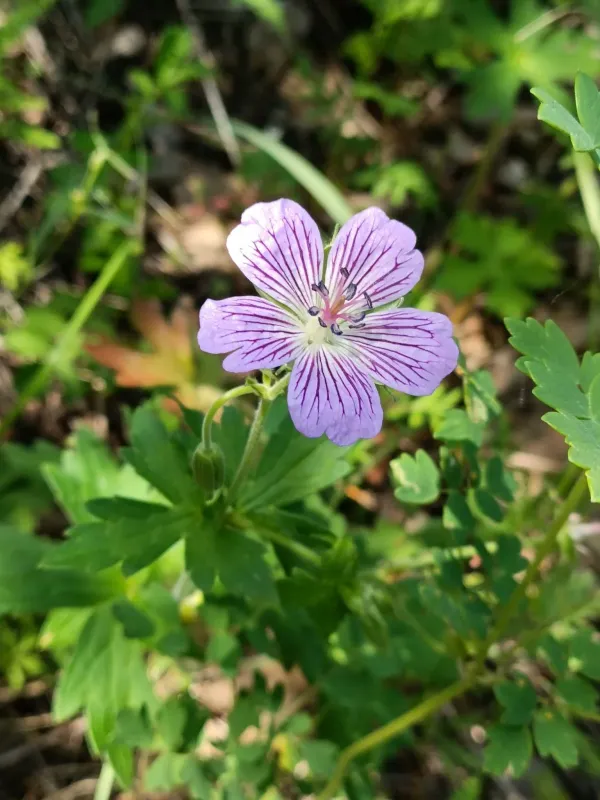
Description
Sowing dates
Geranium wlassovianum is a perennial herbaceous plant belonging to the Geraniaceae family. Seeds are typically sown in late autumn in open ground or in containers to allow for natural stratification, which is essential for germination.
If sowing in the spring, seeds require artificial stratification for 1-2 months at a temperature of about +4 degrees Celsius. This mimics winter conditions and ensures high germination rates and uniform seedling development.
Seeds should be planted in a light, well-draining, and fertile substrate at a depth of approximately 0.5-1 cm. Consistent soil moisture must be maintained during the germination phase to ensure the success of the sprouts.
Seedlings are pricked out once they have developed two or three true leaves. Transplanting to a permanent location in the garden should occur once the danger of late frost has passed, ensuring the plants can establish before winter.
Vegetative propagation via root division is also a highly effective method. Dividing the rootstock in early spring or late summer allows for the preservation of specific horticultural characteristics and yields robust adult plants.
Growing requirements
This species is native to East Asia, spanning regions such as the Russian Far East, Mongolia, and Northern China. Its natural habitat includes meadows and forest edges, which accounts for its hardy nature.
Wlassov's cranesbill thrives in full sun or partial shade. While highly adaptable, it maintains the best foliage color and blooming performance when provided with sufficient light throughout the growing season.
The plant prefers fertile, well-drained soil with a neutral to slightly acidic pH. Proper drainage is crucial to prevent root rot, especially in areas with high annual precipitation or clay-heavy soils.
Maintenance includes moderate watering during dry spells and the application of balanced fertilizers during the active growing season. Regular deadheading can also promote a second flush of blooms in some conditions.
The species is exceptionally winter-hardy and requires no special protection in cold climates. It is well-suited for diverse landscapes, showing great resilience to temperature fluctuations typical of temperate zones.
Main diseases and pests
Geranium wlassovianum is generally robust and resistant to most common garden pests and diseases. However, the primary threat remains root rot caused by stagnant water or excessively waterlogged conditions.
High humidity and poor air circulation can occasionally lead to powdery mildew or leaf spot infections. Improving spacing between plants and removing infected foliage typically keeps these issues under control.
Pests such as aphids or spider mites may appear during prolonged hot and dry periods. If infestation occurs, application of standard horticultural soaps or appropriate insecticides is recommended to protect the foliage.
Slugs and snails can target young shoots in early spring. Protecting the surrounding area with mulches like gravel or crushed shells creates a barrier that discourages these pests from reaching the plant crown.
Routine inspection of the planting site is the best practice for maintaining health. Early detection of any anomalies allows for quick intervention, ensuring the long-term beauty and vigor of the geranium display.