
Small-flowered crane's-bill
Geranium pusillum L.
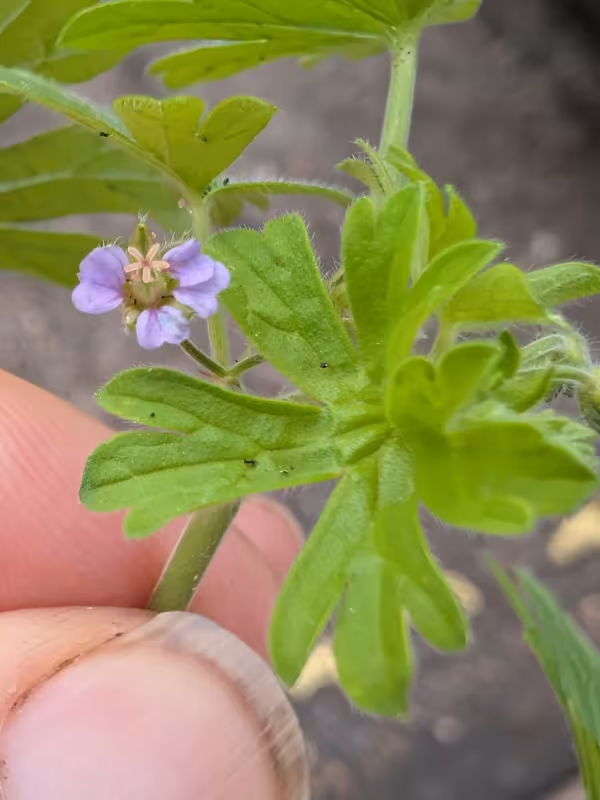
Description
Sowing dates
Geranium pusillum is an herbaceous plant belonging to the Geraniaceae family, typically exhibiting an annual or biennial growth habit. The plant is well-adapted to various environmental conditions, with seed germination often occurring in both autumn and spring periods, which ensures its survival within complex crop rotations.
Growth begins with the formation of a basal rosette, a phase that allows the plant to efficiently capture resources before entering the reproductive stage. This developmental strategy provides the species with a significant competitive advantage in early-season agricultural fields.
Seed production is prolific, and the plant's ability to self-seed makes it a persistent presence in fields where soil disturbance is minimal. The seeds possess a hard seed coat, contributing to their longevity and ensuring that populations remain viable in the soil seed bank for several years.
The flowering period spans from late spring through early autumn, depending on local climate and soil moisture levels. During this time, the plant continuously generates flowers and fruit, ensuring successful propagation and colonization of surrounding areas.
Effective agronomic management requires targeted interventions during the early developmental phases. Mechanical hoeing and cultivation are highly effective at this stage, as the plant's root system is not yet deeply established or capable of significant regeneration after burial.
Growing requirements
Small-flowered crane's-bill thrives in moderately moist, well-drained soils, showing a preference for loamy or sandy substrates. While it displays considerable flexibility regarding soil quality, it performs best in sites with neutral to slightly alkaline pH levels.
Light availability is a critical limiting factor for its growth; the species typically occupies open areas or edges of cultivated fields. In dense crop canopies, its development is often stunted due to the inability to compete for sunlight, which is why early crop establishment is crucial.
The plant demonstrates a strong preference for moderate temperatures and can endure significant seasonal fluctuations. It is generally well-adapted to the temperate climate zones where it frequently serves as a secondary colonizer of disturbed landscapes and farm tracks.
Soil fertility impacts vegetative vigor; however, the species is known to tolerate nutrient-poor conditions, allowing it to colonize marginal lands. High nitrogen levels can promote rapid expansion of its biomass, which may increase its competitive impact on neighboring crops.
Management strategies emphasize maintaining optimal soil health and density. By promoting vigorous crop growth through balanced fertilization and appropriate seed density, farmers can create conditions where the crop naturally suppresses the growth of Geranium pusillum.
Main diseases and pests
In agricultural systems, the species acts as a competitive weed that captures soil nutrients and water, potentially reducing the yield of primary crops. Its dense growth pattern can also interfere with harvesting equipment, particularly in low-growing cereal or legume crops.
Common health challenges include fungal infections such as powdery mildew, which can spread in high-humidity environments. While these diseases do not typically kill the plant, they can limit its size and vigor, sometimes acting as a natural regulator of the population.
Pest interactions primarily involve various aphids and leaf-feeding insects, which can cause minor damage to the foliage. Although these pests usually have a negligible effect on the overall fitness of the plant, they can serve as vectors for viruses that potentially impact nearby crops.
Control of infestations often relies on the application of selective herbicides, specifically targeting broad-leaved weeds during the active growth phase. Integrated pest management, including timely crop rotation and mechanical weeding, is recommended to minimize chemical input.
- Increased risk of fungal disease outbreaks in humid seasons.
- Yield loss due to nutrient competition in early growth phases.
- Need for strategic herbicide application in fallow periods.