
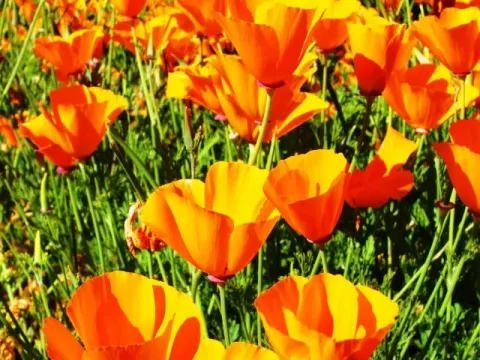
California poppy
California
The California poppy, botanically known as Eschscholzia californica, is a member of the Papaveraceae family. It is a hardy, drought-tolerant species that thrives in full sun and well-drained soils, originating from the western United States.
What the section contains

California poppy
Direct seeding is the only recommended method for cultivation. Seeds should be sown in early spring or late autumn directly onto the soil surface, as the seeds require light to germinate effectively and should not be covered with a thick layer of substrate.
Optimal spacing is essential for plant health. Seeds should be sown to allow for thinning, maintaining a distance of at least 20 cm between plants to ensure adequate airflow and prevent the development of humidity-related diseases.
The plant features a long taproot, making it highly intolerant to transplanting. Any disturbance to the root system during the early stages of growth usually results in stunted development or the death of the seedling.
Once established, the crop typically self-seeds reliably. If the spent flowers are left on the plant, they will produce seed pods that burst, scattering seeds for the following season without human intervention.
This species is exceptionally well-adapted to poor, sandy, or rocky soils. It requires very little soil amendment and often performs best in sites where other more demanding flowers would struggle to survive.
Full sun exposure is a non-negotiable requirement for the California poppy. In shade, the stems become leggy, the plants produce fewer flowers, and the blossoms will fail to open properly during the day.
Water requirements are minimal. The plant is a xerophyte, and excessive irrigation is the most common cause of failure in cultivation. It should only be watered during prolonged droughts to maintain vigor.
Fertilizer application should be kept to a minimum. Nitrogen-rich fertilizers can actually harm the plant by promoting excessive vegetative growth at the expense of floral production, which is the primary reason for growing this species.
Maintenance is simplified by the plant's natural resistance to environmental stressors. However, removing faded blossoms can encourage a secondary flush of flowers later in the season if temperatures remain moderate.
Powdery mildew is the most prevalent fungal disease affecting California poppy, usually occurring in late summer during periods of high humidity. Improving spacing and air circulation is the most effective preventative measure.
Pests such as aphids may congregate on new growth and flower buds. While minor infestations are rarely lethal, severe cases may require treatment with insecticidal soaps or neem oil to protect the plants.
Root rot is the primary physiological disorder caused by overwatering or poor drainage. Once root rot sets in, it is difficult to treat, making prevention through correct site selection the most important aspect of management.
Cutworms can occasionally damage young seedlings by chewing through stems at the soil line. Monitoring for these larvae during the first few weeks of growth can prevent significant losses in plant density.
Practicing good sanitation by clearing debris from the garden bed at the end of the season helps reduce the overwintering population of pests and fungal spores, ensuring a healthier start for the next crop.