
Mourning widow
Geranium phaeum L.
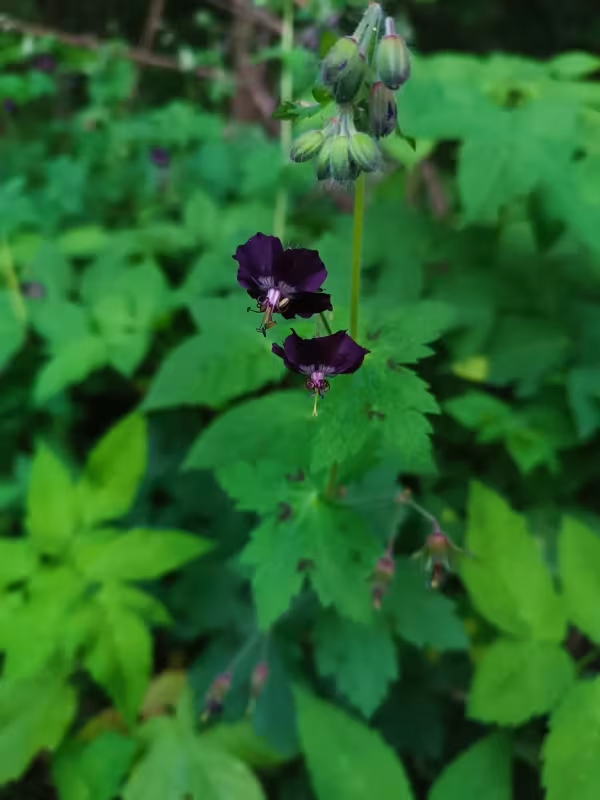
Description
Sowing dates
The mourning widow is commonly propagated through the division of rhizomes, which is the most reliable method for maintaining consistent plant characteristics.
The best time for division is either in early spring as growth begins or in early autumn once the main flowering period has concluded.
Seeds can be sown outdoors in the autumn, allowing for a natural cold stratification process that improves germination rates in the following spring.
When sowing, seeds should be covered lightly with soil, typically at a depth of 0.5 to 1 cm, ensuring the seedbed remains consistently moist.
Seedlings typically develop a robust basal rosette in their first year and usually reach full maturity and peak flowering by their second season.
Growing requirements
Geranium phaeum is a hardy perennial belonging to the Geraniaceae family, prized for its ability to thrive in shaded and woodland garden conditions.
It prefers nutrient-rich, humus-heavy soils that offer good drainage, although the plant is adaptable to various soil types including heavy clays.
This species excels in full shade to partial shade environments, making it an excellent choice for planting under tree canopies or on north-facing slopes.
The plant is exceptionally winter-hardy and requires minimal attention, tolerating harsh winter temperatures without the need for seasonal protection.
Regular maintenance includes basic weeding and an occasional spring mulch to suppress weeds and retain soil moisture throughout the growing season.
Main diseases and pests
Mourning widow is remarkably resistant to pests and diseases, which is one of the primary reasons for its popularity among home gardeners.
In poorly ventilated areas with excessive moisture, plants may occasionally develop powdery mildew, which presents as a white coating on the foliage.
Fungal leaf spots can occur under stressed conditions, but these are rarely severe and can be managed by improving air circulation around the plants.
The plant is largely unbothered by aphids, spider mites, and other common garden pests due to the chemical composition of its leaves and stems.
Sanitation practices, such as clearing debris in late autumn, help minimize the risk of over-wintering pathogens and maintain overall plant hygiene.
Harvesting
Seed collection should take place in late summer just as the seed capsules begin to brown, but before they eject their seeds into the surrounding soil.
Collected capsules should be placed in paper bags and kept in a dry, airy location to complete the drying process before extraction.
This plant is primarily used in landscaping to create lush, shade-tolerant groundcovers that provide color and texture in difficult-to-grow areas.
With its unique dark, almost black-purple flowers and often marbled foliage, it serves as a sophisticated ornamental feature in forest-style gardens.
Beyond its aesthetic appeal, it acts as a reliable filler in mixed borders, effectively preventing weed encroachment through its dense growth habit.