
Bloody cranesbill
Geranium sanguineum L.
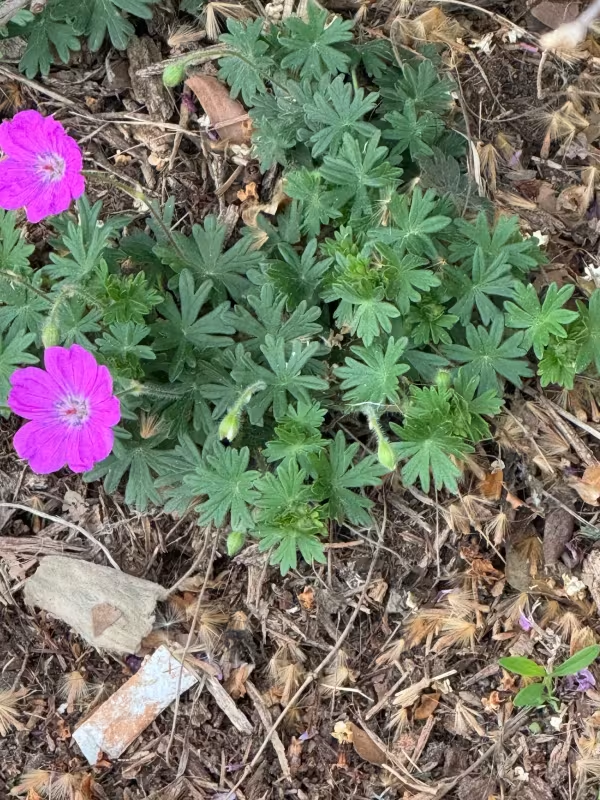
Description
Sowing dates
Sowing seeds of Geranium sanguineum in open ground is best performed in the autumn to allow for natural cold stratification during winter. Spring sowing is also possible in March or April, but it requires pre-treating the seeds at low temperatures for approximately one month to ensure uniform germination.
For container-based propagation, seeds are sown in a nutrient-rich substrate in late winter. The optimal temperature for seed germination ranges between 18 and 20 degrees Celsius, and maintaining stable moisture levels in the potting mix is crucial for successful establishment.
When sowing in the field, seeds should be covered with no more than 1–2 centimeters of soil. Seedlings typically emerge within 2 to 4 weeks, depending on the ambient temperature and the quality of the prepared seedbed.
The culture can also be successfully propagated vegetatively through root division. The best time for this procedure is early spring or early autumn, when the plant is in a period of relative dormancy, allowing the divided sections to establish themselves effectively.
When planting divisions, it is important to provide sufficient spacing between plants, ideally 30–40 centimeters apart, to allow for full development of the root system and the dense foliage mound characteristic of the species.
Growing requirements
Geranium sanguineum is a hardy perennial belonging to the Geraniaceae family, known for its exceptional winter resilience and low maintenance. Its native range spans across most of Europe, the Caucasus, and parts of Asia Minor, where it typically thrives in woodland margins, scrublands, and rocky slopes.
To ensure successful growth, the plant requires well-drained, moderately fertile soil with a neutral to slightly alkaline pH. The plant is sensitive to waterlogged conditions, which can lead to the decay of its robust, knotty rhizome system.
The species is primarily sun-loving, though it displays high tolerance for light shade during the hottest parts of the day. Under adequate sunlight, the plant maintains a compact, dense, and spherical growth habit, reaching heights of 50–60 centimeters.
The presence of calcium in the soil profile is a significant factor for optimal development, as the plant naturally thrives on limestone substrates. While it requires moderate watering during the intensive growth phase, mature plants exhibit remarkable drought tolerance.
Standard horticultural practices include periodic soil cultivation and weed control, particularly during the first year of establishment. Applying mulch around the root zone helps maintain stable soil temperatures and preserves moisture throughout the drier summer months.
Main diseases and pests
Geranium sanguineum possesses a natural resistance to most common ornamental plant diseases. However, failure to follow proper agricultural practices can lead to the development of powdery mildew, which manifests as a whitish coating on the leaf blades.
Waterlogged soil conditions can foster the development of fungal pathogens that attack the root system. To prevent such issues, strictly adhering to a balanced irrigation schedule and ensuring high-quality site drainage is essential.
Among common pests, aphids and the larvae of certain butterfly species may occasionally damage the young foliage. If infestations are detected, localized treatments with systemic insecticides are recommended to control the spread.
Rust is another potential pathogen that can affect the geranium in conditions characterized by high humidity and poor air circulation. Timely removal of affected plant parts and ensuring proper spacing between plants helps to reduce the overall disease pressure.
An effective protection strategy includes rigorous phytosanitary control, involving the regular removal of plant debris that may serve as an overwintering site for various pathogens and pests.