
Woolly-anther geranium
Geranium erianthum DC.
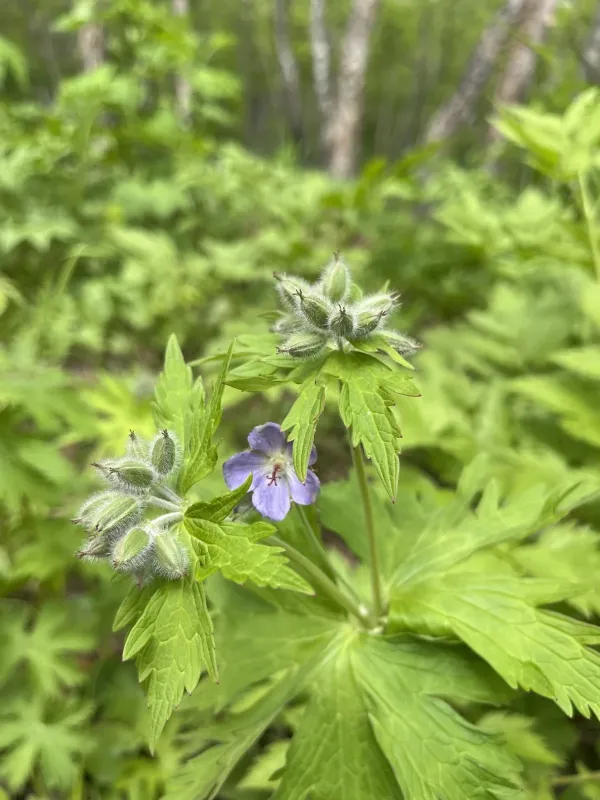
Description
Growing requirements
The woolly-anther geranium (Geranium erianthum) belongs to the Geraniaceae family. It is a hardy perennial known for its resilience in cold climates and subarctic environments.
Native to East Asia, including parts of Siberia, the Russian Far East, and Japan, this species thrives in open meadows and forest edges, adapting well to diverse terrains.
Cultivation requires well-drained, fertile soil. The plant performs best in neutral to slightly acidic conditions and benefits from full sun exposure, although it tolerates partial shade.
Botanically, the species is identified by its distinctive hairy anthers, which provide its common name. The plant grows in dense clumps and features a robust rhizome system, ensuring long-term survival.
Economically, Geranium erianthum is valued both as a decorative perennial for landscaping and as a source of polyphenols and tannins for medicinal and industrial use.
Main diseases and pests
The most significant pathological threat to the crop is powdery mildew, which can spread rapidly under conditions of high humidity and poor airflow within the plant canopy.
Insect pests such as aphids and spider mites are frequent invaders. They feed on the sap of the leaves, which causes stunted growth and reduces the overall yield of biomass.
Management practices include maintaining proper plant spacing to ensure adequate ventilation, which significantly reduces the risk of fungal outbreaks in dense plantings.
Integrated pest management (IPM) strategies, including the use of neem oil or biological soap sprays, are recommended to control infestations without harming beneficial local insect populations.
Crop rotation and field sanitation are essential to prevent the buildup of soil-borne pathogens, ensuring the long-term productivity of the geranium cultivation site.