
Dalmatian cranesbill
Geranium dalmaticum (Beck) Rech. f.
Description
Growing requirements
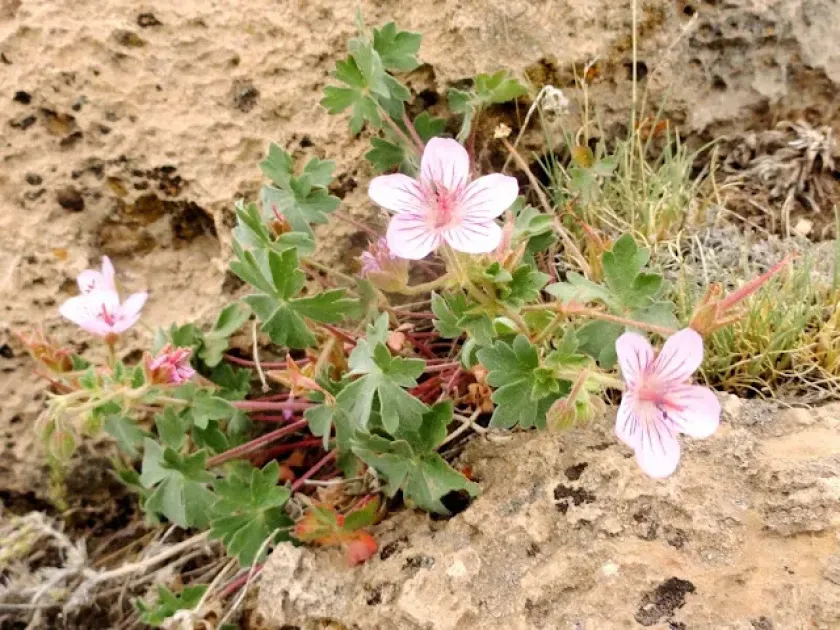
Dalmatian cranesbill (Geranium dalmaticum) is a low-growing perennial herb belonging to the Geraniaceae family. Native to the Balkan Peninsula, specifically Croatia, it is well-adapted to rocky, calciferous habitats, making it a popular choice for rock gardens.
The plant features creeping rhizomes that allow it to form a dense, mat-like foliage. The leaves are glossy, rounded, and lobed, providing year-round interest. In summer, it produces delicate, cup-shaped flowers in shades of pink, held above the foliage on short stalks.
To ensure optimal growth, this plant requires full sun to light shade and well-drained soil. It thrives in neutral to slightly alkaline pH conditions. It is remarkably tolerant of poor soils, provided that drainage remains efficient to prevent winter rot.
Cultural practices are minimal once the plant is established. It exhibits high drought tolerance and winter hardiness. Watering is generally only required during the establishment phase or extreme summer heat to maintain vibrant foliage color.
In landscaping and agriculture, this species is primarily used as a groundcover to control soil erosion and suppress weeds. It is also an excellent candidate for alpine gardens, containers, and edging along stone walkways, where it creates a naturalistic aesthetic.
Main diseases and pests
Geranium dalmaticum is generally pest-free and disease-resistant. However, the most significant risk to its long-term viability is waterlogging, which often leads to crown or root rot if the soil remains excessively moist during the winter months.
Powdery mildew can occasionally affect plants in areas with poor air circulation or excessive humidity. Improving spacing between plants and selecting sites with adequate natural airflow effectively mitigates this fungal risk.
Slugs and snails may occasionally graze on the foliage during cool, wet weather. If pest pressure becomes significant, using barrier materials like crushed gravel or organic deterrents is recommended to protect the young leaves.
While the plant is hardy, it is important to avoid over-fertilization. Excess nutrients can lead to lush but weak growth, which makes the plant more susceptible to opportunistic pathogens and reduces its natural compact habit.
Overall, maintaining the health of Dalmatian cranesbill requires little chemical intervention. Providing a site with sharp drainage and avoiding overcrowding are the most effective strategies to keep the plants vigorous for many years.