
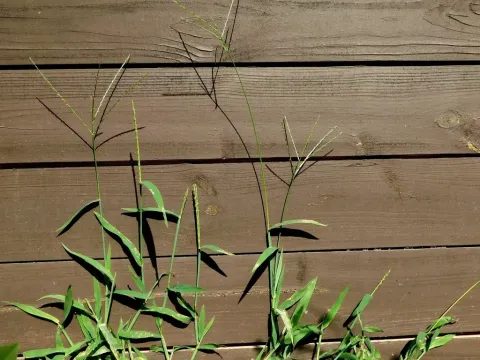
Crabgrass
Digitaria
The sowing of Digitaria typically begins in the spring once soil temperatures reach a stable range of 12–15°C, usually spanning from late April to mid-May.
What the section contains
 Arizona cottontop
Digitaria californica
Arizona cottontop
Digitaria californica
 Bicornate crabgrass
Digitaria bicornis
Bicornate crabgrass
Digitaria bicornis
 Cotton Panic Grass
Digitaria brownii
Cotton Panic Grass
Digitaria brownii
 Digitaria abludens
Digitaria abludens
Digitaria abludens
 Digitaria abyssinica
Digitaria acuminatissima
Digitaria acuminatissima
Digitaria abyssinica
Digitaria abyssinica
Digitaria acuminatissima
Digitaria acuminatissima
 Digitaria aequiglumis
Digitaria aequiglumis
Digitaria aequiglumis
 Digitaria ammophila
Digitaria ammophila
Digitaria ammophila
 Digitaria argillacea
Digitaria argillacea
Digitaria argillacea
 Digitaria atrofusca
Digitaria coenicola
Digitaria coenicola
Digitaria atrofusca
Digitaria atrofusca
Digitaria coenicola
Digitaria coenicola
 Digitaria cognata
Digitaria compressa
Digitaria compressa
Digitaria cognata
Digitaria cognata
Digitaria compressa
Digitaria compressa
 Digitaria connivens
Digitaria corynotricha
Digitaria corynotricha
Digitaria connivens
Digitaria connivens
Digitaria corynotricha
Digitaria corynotricha
 Digitaria cruciata
Digitaria debilis
Digitaria debilis
Digitaria cruciata
Digitaria cruciata
Digitaria debilis
Digitaria debilis
 Digitaria delicata
Digitaria delicatula
Digitaria delicatula
Digitaria delicata
Digitaria delicata
Digitaria delicatula
Digitaria delicatula
 Digitaria divaricatissima
Digitaria divaricatissima
Digitaria divaricatissima
 Digitaria diversinervis
Digitaria diversinervis
Digitaria diversinervis
 Digitaria fauriei
Digitaria fauriei
Digitaria fauriei
 Digitaria fuscescens
Digitaria gayana
Digitaria gayana
Digitaria fuscescens
Digitaria fuscescens
Digitaria gayana
Digitaria gayana
 Digitaria gazensis
Digitaria gazensis
Digitaria gazensis
 Digitaria hayatae
Digitaria heteranthera
Digitaria heteranthera
Digitaria horizontalis
Digitaria horizontalis
Digitaria humbertii
Digitaria humbertii
Digitaria jubata
Digitaria jubata
Digitaria hayatae
Digitaria hayatae
Digitaria heteranthera
Digitaria heteranthera
Digitaria horizontalis
Digitaria horizontalis
Digitaria humbertii
Digitaria humbertii
Digitaria jubata
Digitaria jubata
 Digitaria lanuginosa
Digitaria languinosa
Digitaria lecardii
Digitaria lecardii
Digitaria leptorhachis
Digitaria leptorhachis
Digitaria lanuginosa
Digitaria languinosa
Digitaria lecardii
Digitaria lecardii
Digitaria leptorhachis
Digitaria leptorhachis
 Digitaria longiflora
Digitaria longiflora
Digitaria longiflora
 Digitaria macractenia
Digitaria macroblephara
Digitaria macroblephara
Digitaria macractenia
Digitaria macractenia
Digitaria macroblephara
Digitaria macroblephara
 Digitaria monodactyla
Digitaria myriostachya
Digitaria myriostachya
Digitaria monodactyla
Digitaria monodactyla
Digitaria myriostachya
Digitaria myriostachya
 Digitaria nodosa
Digitaria nodosa
Digitaria nodosa
 Digitaria nuda
Digitaria nuda
Digitaria nuda
 Digitaria parviflora
Digitaria patens
Digitaria patens
Digitaria parviflora
Digitaria parviflora
Digitaria patens
Digitaria patens
 Digitaria pectiniformis
Digitaria pectiniformis
Digitaria pectiniformis
 Digitaria pennata
Digitaria pennata
Digitaria pennata
 Digitaria perrottetii
Digitaria phaeothrix
Digitaria phaeothrix
Digitaria pseudodiagonalis
Digitaria pseudodiagonalis
Digitaria perrottetii
Digitaria perrottetii
Digitaria phaeothrix
Digitaria phaeothrix
Digitaria pseudodiagonalis
Digitaria pseudodiagonalis
 Digitaria radicosa
Digitaria sacchariflora
Digitaria sacchariflora
Digitaria seriata
Digitaria seriata
Digitaria radicosa
Digitaria radicosa
Digitaria sacchariflora
Digitaria sacchariflora
Digitaria seriata
Digitaria seriata
 Digitaria setigera
Digitaria setigera
Digitaria setigera
 Digitaria stricta
Digitaria stricta
Digitaria stricta
 Digitaria ternata
Digitaria thouarsiana
Digitaria thouarsiana
Digitaria ternata
Digitaria ternata
Digitaria thouarsiana
Digitaria thouarsiana
 Digitaria tricholaenoides
Digitaria tricholaenoides
Digitaria tricholaenoides
 Digitaria villosa
Digitaria villosa
Digitaria villosa
 Digitaria violascens
Equatorial crabgrass
Digitaria aequatoriensis
Digitaria violascens
Digitaria violascens
Equatorial crabgrass
Digitaria aequatoriensis
 Iburu
Digitaria iburua
Iburu
Digitaria iburua
Crabgrass
Given the small size of the seeds, they should be planted at a shallow depth of 1–2 centimeters to ensure consistent germination and emergence.
Proper seedbed preparation is crucial; the surface must be leveled and firmed to ensure adequate soil-to-seed contact, which facilitates moisture absorption.
Seeding rates are determined by the intended use, with higher densities recommended for rapid ground coverage and forage production purposes.
Crabgrass exhibits vigorous early growth, which helps it quickly establish a strong root system, allowing it to compete effectively against other opportunistic species.
As a member of the Poaceae family, Digitaria is a warm-season grass that thrives under full sunlight and is highly sensitive to shade and low temperatures.
It displays remarkable adaptability to various soil types, though it performs best in well-drained, sandy loam soils with a pH ranging from 5.5 to 7.5.
One of the key agronomic advantages of this crop is its exceptional drought tolerance, allowing it to maintain growth even under irregular rainfall patterns.
Nutrient requirements are moderate, but the crop responds positively to nitrogen fertilization, which significantly enhances biomass accumulation.
The plant is highly frost-sensitive, meaning that any exposure to freezing temperatures can cause immediate stunting or death of the vegetative tissue.
The total yield of Digitaria biomass is significantly influenced by the frequency of cuttings and the general nutrient availability within the soil profile.
Under optimal management conditions, the crop is capable of producing multiple harvests within a single season due to its rapid regrowth rate.
Nutritional analysis confirms that young Digitaria tissue contains high protein levels, making it an excellent component for livestock feed programs.
Management must focus on timing the harvest correctly to maximize both biomass volume and the nutritional quality of the forage being collected.
Consistent irrigation and fertilization can push yield potential, making this crop a viable option for high-intensity forage management systems.
Digitaria generally possesses a strong natural resistance to many common fungal diseases that frequently impact other commercial grass species.
In cases of prolonged waterlogging or poor soil drainage, the crop may become susceptible to root rot, which can severely compromise plant vigor.
Pest management should focus on early-stage threats, such as aphids or various grass-feeding larvae, which can damage succulent young stems.
Effective weed control during the establishment phase is critical, as competitive broadleaf weeds can suppress Digitaria growth in the early weeks.
Integrated pest management, including crop rotation and field monitoring, is the most sustainable approach to keeping these populations under control.
The ideal harvest window for Digitaria is during the early flowering stage to ensure the best balance between biomass weight and protein content.
Using mower-conditioners during harvest helps reduce the drying time of the swath, which is vital for maintaining the quality of the harvested hay.
Field drying should be managed carefully to minimize exposure to moisture or rain, which can cause significant nutrient leaching and spoilage.
If silage production is the goal, the biomass should be chopped immediately after cutting to optimize packing density and fermentation stability.
Care must be taken to prevent over-maturation, as the plants can become fibrous and less digestible if harvesting is delayed beyond the flowering stage.