
Digitaria leptorhachis
Digitaria leptorhachis
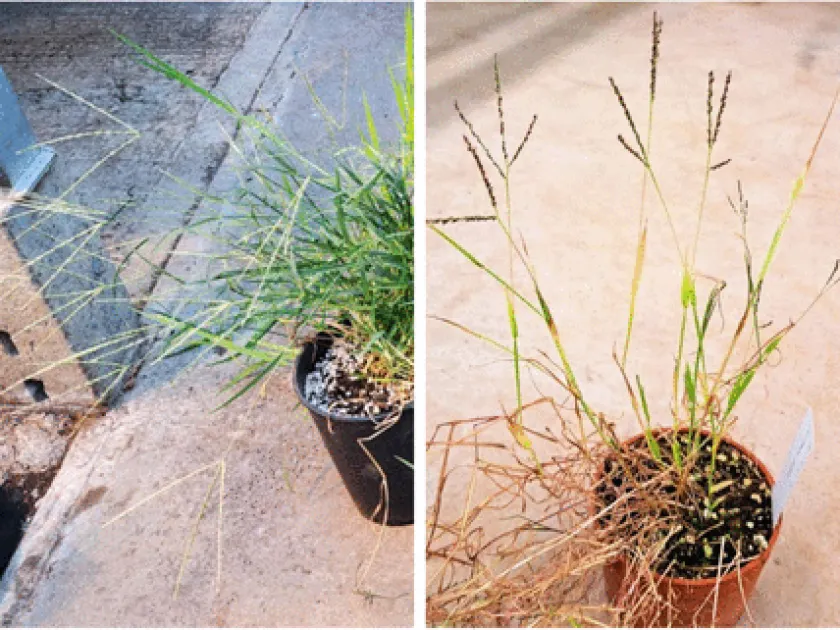
Description
Growing requirements
Digitaria leptorhachis belongs to the Poaceae family, a group of grasses widely valued for their ecological and agricultural significance. It is a perennial species primarily adapted to tropical and subtropical climatic zones where the growing season is long and warm.
The plant thrives in well-drained, sandy, or light-textured soils. One of its key agronomic advantages is its ability to grow successfully in nutrient-poor environments where other, more demanding crops might fail to establish a healthy population.
Climate requirements include plenty of sunlight and temperatures generally ranging between 20°C and 30°C. While the species shows significant drought tolerance, it is susceptible to waterlogging and does not perform well in swampy or heavy clay soils that retain excess moisture.
The botanical structure of this grass features thin stems and slender inflorescences, contributing to a high-quality forage density. Its root system is deep and efficient, allowing the plant to stabilize loose soils effectively.
Proper field establishment requires careful site selection, ensuring the ground is free of standing water. Given its perennial nature, the grass can provide long-term ground cover once it has successfully established its root system during the initial stages.
Yield
In agricultural settings, Digitaria leptorhachis is primarily utilized for grazing. Its high regrowth capacity after defoliation makes it an excellent candidate for managed rotational grazing systems, providing consistent forage availability.
Productivity is highly influenced by fertility management. Applying nitrogen fertilizers can significantly boost the biomass yield, especially when the grass is intended for heavy grazing or hay production during the peak of the season.
When used for hay production, it is important to harvest at the appropriate vegetative stage to maintain optimal nutritional quality. Delayed harvesting may lead to an increase in stem fiber content, which can reduce its digestibility for livestock.
Beyond its value as a feed crop, the species is recognized for its role in soil conservation. Its dense root network binds soil particles together, playing a vital role in preventing wind and water erosion on vulnerable landscapes.
Sustainable use of this grass requires avoiding overgrazing. By allowing the plants to recover after each grazing cycle, farmers can maintain the vigor and longevity of the stand for many years, ensuring steady yields across seasons.