
Digitaria fauriei
Digitaria fauriei
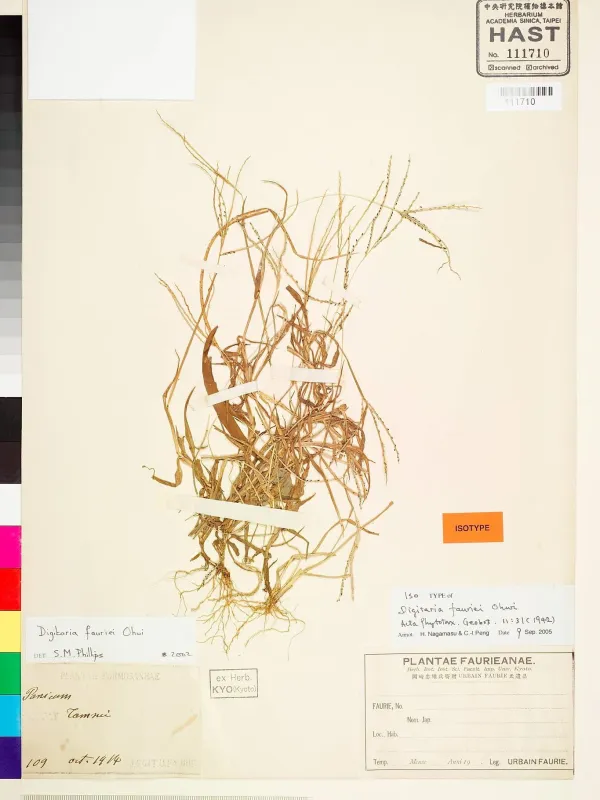
Description
Sowing dates
Digitaria fauriei is a heat-loving annual grass, therefore, the optimal sowing period occurs when the soil at the seeding depth warms up to 12–15 degrees Celsius.
In temperate climates, it is recommended to carry out sowing in late spring or early summer to avoid the impact of late spring frosts, which are detrimental to young seedlings.
When used as a post-harvest crop, sowing is performed immediately after the harvesting of winter cereals to effectively utilize residual soil moisture.
The sowing depth should be minimal, as the culture has very small seeds that are prone to losing germination capacity if buried too deeply into the soil horizon.
After sowing, the field must be rolled to ensure better contact between the seeds and soil particles, which is critical for achieving uniform and rapid germination.
Growing requirements
This member of the Poaceae family prefers well-lit areas, as the crop is highly sensitive to shading and requires direct sunlight for optimal metabolic performance.
The plant thrives on light, sandy, and sandy-loam soils, demonstrating high adaptability to low-humus conditions, although it responds best to moderately fertile soil types.
The crop shows significant drought tolerance, allowing it to be used in regions with unstable rainfall patterns where other forage grasses fail to produce reliable biomass.
For optimal growth, soil acidity should range from pH 5.5 to 7.0, and the plant can withstand short-term compaction of the topsoil layer relatively well.
During the active vegetation period, the crop requires moderate rainfall but reacts extremely negatively to waterlogging, which can lead to root rot and reduced growth rates.
Yield
The yield of Digitaria fauriei green mass depends directly on nitrogen fertilizer availability and the temperature regime during the active tillering phase of the plant.
With proper agronomic practices, the crop is capable of forming a significant volume of vegetative mass in a short time, making it an effective component of green forage systems.
On average, under favorable conditions, productivity levels reach 20–30 tons of green mass per hectare with one or two full cuts conducted during a single season.
The use of nitrogen top-dressing after the first cut allows for significantly accelerating the regeneration of the stand and increasing overall biological productivity in the autumn.
An important factor in maintaining high yield is the control of competitive vegetation in the early growth stages, as the crop grows relatively slowly during the seedling phase.
Main diseases and pests
Major phytopathological threats for this crop include fungal diseases, such as cereal rust, which affects the leaf apparatus under high air humidity conditions.
Root rot can occur during systematic soil over-saturation, leading to premature thinning of the crops and a decrease in the overall nutritional value of the biomass.
Among pests, the greatest danger is posed by cereal flies and aphids, which damage young shoots during the 3-4 leaf stage, slowing down the development of the entire plant.
Preventive measures are used to control pest populations, including crop rotation and the timely removal of weeds, which can serve as reservoirs for infection.
Chemical treatment of fields with fungicides and insecticides should be carried out strictly according to the economic damage threshold to minimize stress on the agroecosystem.
Harvesting
Harvesting for green mass is recommended during the booting or early heading phase, when the protein content in the plant is at its highest level.
Delaying harvest time leads to the coarsening of stems, which significantly reduces the forage value and the digestibility coefficient for livestock.
For hay production, mowing is followed by active tedding in windrows, as the high moisture evaporation intensity contributes to the rapid drying of thin leaves.
If the cultivation objective is seed production, harvesting begins when the grains reach wax maturity, characterized by 70-80% of seeds acquiring their specific color and density.
For commercial seed production, grain combine harvesters are used with adjustments to the threshing drum speed to prevent the crushing of small-sized seeds.