
Digitaria ammophila
Digitaria ammophila
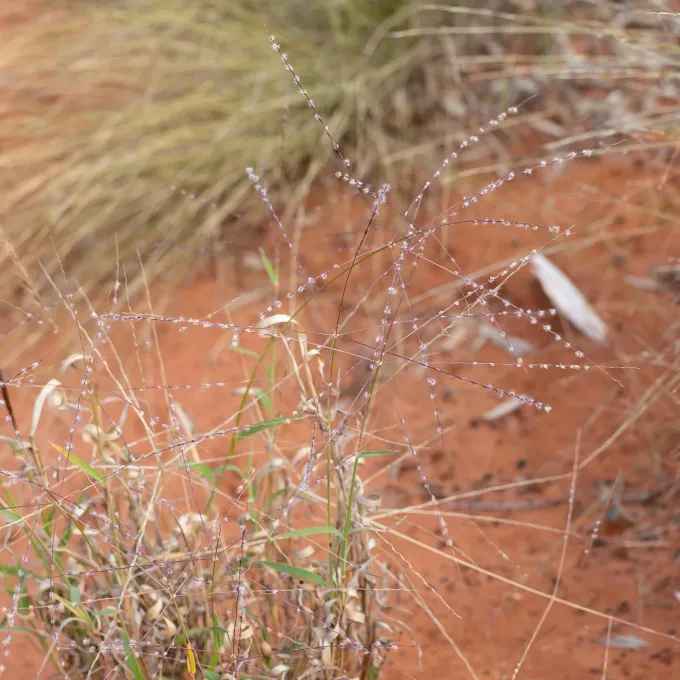
Description
Sowing dates
Digitaria ammophila, a resilient member of the Poaceae family, propagates effectively through its seeds. For successful cultivation, sowing should be initiated when soil temperatures consistently reach 15–18 degrees Celsius, typically at the beginning of the local rainy season.
The seeds are notably small, requiring precise placement at a shallow depth of 1–2 centimeters. Proper seedbed preparation is vital, as the seeds need firm contact with the soil to initiate germination successfully.
In regions with high temperature fluctuations, sowing should be timed to allow the root system to establish before the onset of extreme heat. Light irrigation during the early growth stages is highly beneficial for stand uniformity.
Sowing density is calculated based on the purity and germination percentage of the seed lot, with a typical rate of 5–8 kilograms per hectare. Over-seeding should be avoided to prevent excessive competition within the stand.
Germination can take up to three weeks depending on soil moisture. During this critical window, monitoring and managing weeds is essential, as the young seedlings are vulnerable to competition for resources.
Growing requirements
This grass species is exceptionally well-adapted to poor, sandy soils, making it an excellent choice for marginal land reclamation. It thrives in environments where soil nutrient availability is too low for common agricultural crops.
Digitaria ammophila displays remarkable drought tolerance, which is its primary agricultural advantage. It prefers open, sunny environments and does not tolerate long-term shade, which can hinder its growth and density.
Soil pH levels should be slightly acidic to neutral for optimal development. The plant is highly sensitive to waterlogging; therefore, well-drained soil is a non-negotiable requirement for its healthy growth.
The plant manages well under moderate to high temperature regimes. Its physiological structure allows it to maintain biological activity even when moisture levels are below the threshold for more demanding grass species.
In terms of ecological utility, it acts as a robust soil stabilizer. Its extensive, fibrous root system effectively binds loose sandy particles, significantly reducing the risk of wind-induced soil erosion.
Yield
The primary agricultural use of Digitaria ammophila is as a grazing forage in arid or semi-arid regions. It provides a reliable source of green mass where traditional forage crops often fail to produce.
Annual yields of dry matter can reach 2–4 tons per hectare, depending heavily on the availability of moisture and the nutritional status of the soil. Supplemental nitrogen fertilization can improve these yields in managed systems.
Nutritional value is at its peak during the vegetative phase and early flowering stages. During this time, the biomass provides adequate protein levels to support livestock during the active grazing season.
Harvesting for hay is possible if timed correctly to avoid excessive maturity. If left to mature too long, the lignin content increases significantly, which reduces the digestibility of the forage for livestock.
The species exhibits a strong ability to recover after grazing or cutting. Sustainable management practices, such as rotational grazing, allow for multiple harvesting cycles within a single growing season.
Main diseases and pests
Digitaria ammophila is inherently resistant to many common fungal diseases that plague high-input agricultural grasses. Its natural resilience makes it a low-maintenance option for land cover.
However, in environments with poor air circulation and excessive humidity, there is a risk of powdery mildew. Proper plant spacing and avoiding dense stands can effectively mitigate these risks.
Pest issues are generally limited; however, soil-dwelling larvae can sometimes damage the roots of younger plants. Such damage is usually localized and rarely requires broad-spectrum chemical interventions.
Insects like aphids may occasionally affect the stems during severe drought periods when the plant's stress response is high. Constant monitoring is recommended to determine if the infestation levels warrant treatment.
Disease and pest management strategies should focus on prevention through good agronomic practices. Ensuring soil drainage and promoting plant health are the best defenses against environmental stressors.