
Digitaria tricholaenoides
Digitaria tricholaenoides
Description
Growing requirements
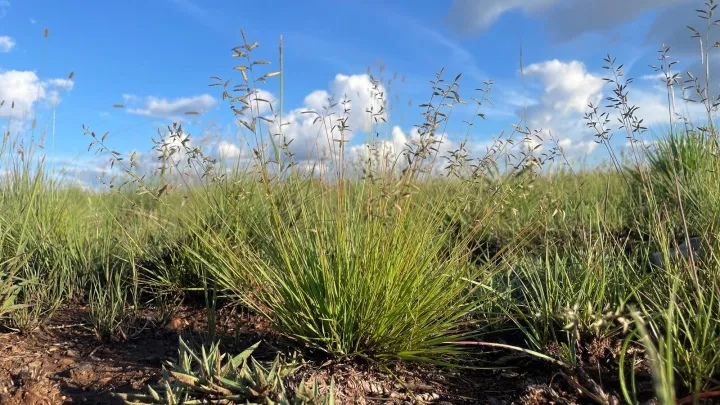
Digitaria tricholaenoides is a perennial grass species belonging to the Poaceae family. Native to the African savannahs, it has gained recognition in agricultural circles for its resilience and nutritional value for livestock.
The plant thrives in a variety of soil types, ranging from sandy loams to heavier clay-based soils, provided there is adequate drainage. It is highly valued for its ability to withstand low-fertility conditions compared to other forage grasses.
Climate-wise, this crop prefers warm, frost-free environments. It shows significant drought tolerance, making it an excellent candidate for regions prone to erratic rainfall patterns and seasonal water scarcity.
Its botanical structure is characterized by dense, tufted growth and pubescent leaves, which help reduce transpiration losses. These adaptations allow the plant to maintain productivity even during prolonged dry spells.
For economic use, it is primarily harvested as grazing forage or occasionally baled for hay. Its high protein content during the vegetative stage makes it a preferred component in sustainable grassland management systems.
Main diseases and pests
The crop is susceptible to various fungal pathogens, specifically rust diseases (Puccinia spp.), which thrive in humid conditions and can reduce the overall foliage quality significantly.
Pest management is often focused on controlling locusts and other orthopteran insects that can quickly consume large quantities of leaf biomass, especially during outbreaks.
Root-feeding nematodes can become a problem in older, established stands, leading to a gradual decline in vigor and yield capacity over several growing seasons.
Implementation of proper grazing rotation is a key strategy to minimize disease spread, as it allows the grass to recover and prevents the buildup of pathogen populations in the soil.
Cultural control methods, such as occasional mowing and the removal of infected residues, remain the primary defense mechanism against diseases for this low-input forage crop.