
Digitaria divaricatissima
Digitaria divaricatissima
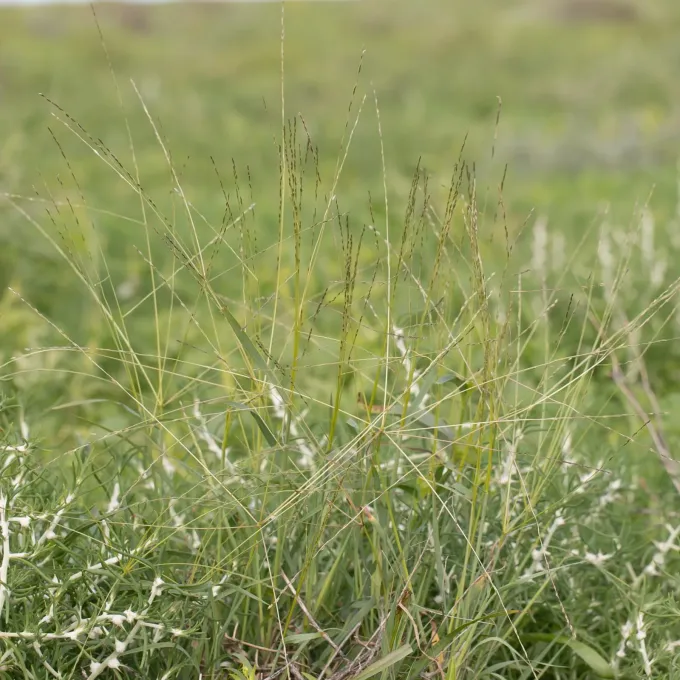
Description
Sowing dates
Sowing of Digitaria divaricatissima is generally planned for periods when stable warm temperatures are established, as the seeds require sufficient soil warmth for successful germination.
Optimal planting dates typically fall in the spring season, when the risk of late frosts is minimal and natural moisture levels support uniform crop emergence.
Seeding is usually performed by surface broadcasting or shallow placement, as the small size of the seeds makes deep burial in the soil unfavorable.
Proper soil preparation is crucial; the field must be leveled and cleared of perennial weeds that could compete with the establishing grass in its early stages.
When incorporating the species into pasture seed mixtures, seeding rates should be carefully adjusted according to the companion species to prevent dominance or suppression.
Growing requirements
Digitaria divaricatissima belongs to the Poaceae family and is a warm-season perennial grass native to diverse Australian landscapes.
The plant demonstrates high resilience to drought, maintaining its vegetative growth even during prolonged dry spells, making it an excellent choice for arid regions.
It has moderate soil requirements, preferring well-drained sandy or loamy soils with adequate levels of essential mineral nutrients.
The species is sensitive to high salinity and waterlogged conditions, so selected sites must have a良好 drainage system to avoid root stress.
Optimal growth requires an open, sunlit environment, as shading significantly restricts biomass production and reduces the overall nutritional value of the foliage.
Yield
The biomass yield of Digitaria divaricatissima is directly influenced by seasonal rainfall patterns and the availability of nitrogen during the peak growing phase.
Under managed grazing or regular cutting schedules, the crop can provide multiple harvests per season, ensuring a consistent supply of livestock forage.
A key biological advantage of this species is its rapid recovery rate after defoliation, which enhances its overall utility in intensive pasture management.
Productivity metrics are significantly boosted when irrigation is applied, enabling the grass to serve as a high-performance fodder crop.
The forage quality remains high during early developmental stages, offering a good balance of fiber and crude protein for optimal animal nutrition.
Main diseases and pests
This grass species exhibits natural resistance to many common cereal diseases, although rust infections can occur under conditions of excessive crop density.
In environments with high humidity and poor air circulation, there is a risk of root rot development, which can weaken the plant and reduce its longevity.
Major pests affecting this grass include various grass fly species and cutworms, which can cause significant damage to foliage and apical meristems.
Integrated pest management strategies are recommended, focusing on preventative measures and minimizing chemical usage to ensure safe pasture access for livestock.
Additionally, controlling weed infestations is necessary, as certain weeds may act as vectors for viral pathogens that negatively impact grass productivity.
Harvesting
Harvesting for hay should be performed during the boot stage or at the onset of heading to maximize the preservation of nutrients in the stalks and leaves.
For pasture usage, it is essential to follow a strict rotational grazing schedule to avoid overgrazing and protect the structural integrity of the root system.
The harvesting technology must prioritize gentle handling to preserve the plant's capacity for tillering and vegetative regrowth post-cut.
Leaving stubble at an appropriate height is vital to provide insulation for the root system and to promote faster regrowth of the aftermath.
Timely harvesting prevents seed shattering and ensures the production of high-quality forage with an ideal balance of structural carbohydrates.