
Creeping mannagrass
Glyceria spicata
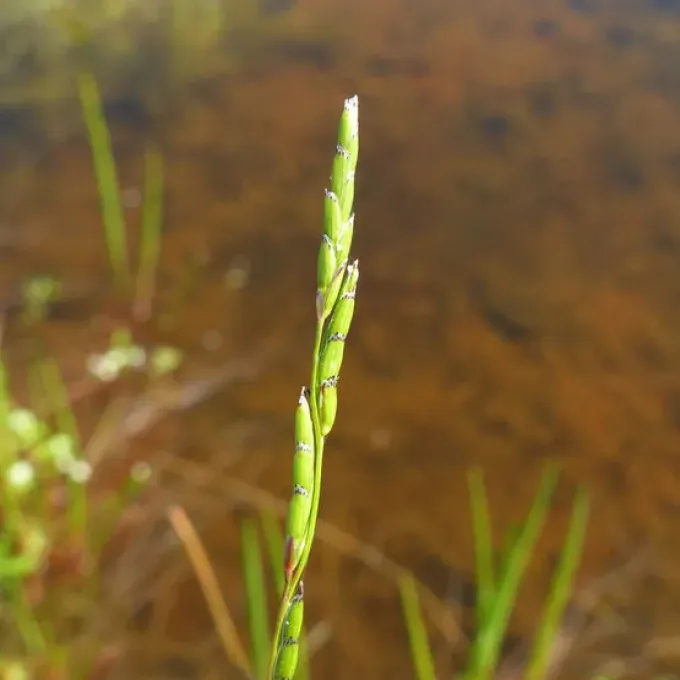
Description
Growing requirements
Creeping mannagrass (Glyceria spicata) is a perennial grass species belonging to the Poaceae family. This plant is well-adapted to habitats with high moisture levels, typically occupying wetland margins, floodplains, and areas with periodic water saturation.
Botanically, the plant is characterized by a vigorous rhizomatous root system, which allows it to thrive in marshy conditions where many other forage crops would fail. Its ability to propagate vegetatively makes it highly effective for soil stabilization in erosion-prone areas.
The environmental requirements are strictly linked to hydrology. It prefers fertile, nutrient-rich soils that remain consistently moist. While it can withstand temporary flooding, stagnant water should not reach excessive depths that impede gas exchange in the root zone.
In terms of climate, the species is remarkably cold-hardy. It is well-suited for temperate climates, successfully enduring long winters and demonstrating early spring growth once temperatures rise above the freezing point.
Agricultural management should prioritize soil fertility maintenance. Fertilization, particularly with nitrogen, significantly increases biomass production, especially in pastures where rapid regrowth after grazing or cutting is required.
Harvesting
The primary use of Glyceria spicata in agriculture is as a forage resource for livestock. It is valued for its palatability and nutritional content, particularly when harvested at the vegetative or early flowering stages before lignification occurs.
Hay production requires timing the cut carefully. Harvesting too late in the season reduces the energy density of the fodder, whereas early cutting ensures a high-protein feed that is easily digestible for cattle and sheep.
Grazing management should focus on avoiding overgrazing. Rotational grazing schemes are highly recommended to allow the root systems to replenish energy reserves between cycles, thereby ensuring the longevity of the stand.
Beyond its value as animal feed, this species plays a crucial role in ecological restoration. Its deep and dense root network helps in water filtration and sediment retention along streams and riparian zones.
Seed harvesting for propagation is feasible but requires careful planning to ensure the inflorescences are fully mature. Farmers should monitor the moisture content of the seeds to ensure optimal storage and germination quality.