
Digitaria connivens
Digitaria connivens
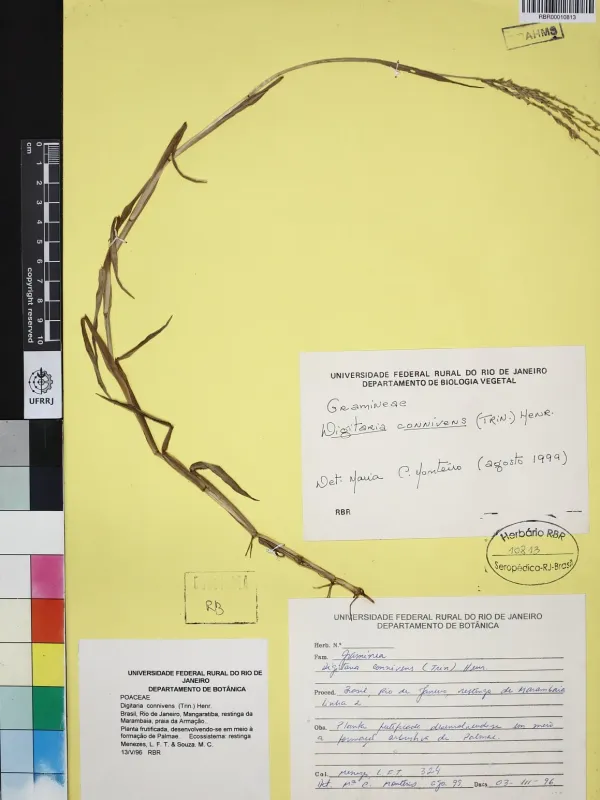
Description
Growing requirements
Digitaria connivens is a significant plant species belonging to the Poaceae family. It is widely recognized for its adaptability to various temperate and tropical environments, often serving as a key component of grassland ecosystems.
Botanically, the plant is characterized by its slender, elongated stems and narrow leaves. The root system is fibrous and resilient, enabling the grass to thrive in diverse soil conditions, ranging from well-drained loams to slightly more sandy substrates.
Regarding climatic requirements, this grass favors warm and sunny conditions. It exhibits the best growth rates during high-temperature months, which makes it a productive option for summer grazing and hay production in compatible climate zones.
Soil management for this culture involves maintaining adequate moisture levels and ensuring the soil structure allows for proper aeration. While it is hardy, the plant responds exceptionally well to nutrient-rich soils and supplemental fertilization.
Agrotechnical practices focus on proper sowing density and timing to maximize ground cover. Regular maintenance, such as balanced nitrogen applications and weed management during the establishment phase, ensures high-quality forage production.
Yield
The primary agricultural use of Digitaria connivens is its role in livestock nutrition. Its chemical composition makes it a palatable and nutritious forage source for various types of ruminants, supporting consistent weight gain.
In terms of harvest yields, the culture is known for its impressive regrowth capabilities after mowing. This allows farmers to perform multiple harvests throughout the growing season, provided that moisture levels are sufficient to support rapid regeneration.
Main diseases and pests
The crop is susceptible to common fungal pathogens, including rusts and powdery mildew. These diseases typically manifest during periods of high humidity and poor field drainage, necessitating careful observation and preventative measures.
Insect pests such as grass aphids and certain types of grasshoppers can negatively impact yield by feeding on foliage. These infestations can weaken the plants and lead to a reduction in the overall dry matter biomass per hectare.
Effective management against threats involves integrated pest control strategies. This includes regular field scouting, utilizing resistant varieties where available, and ensuring optimal plant density to improve overall stand health and disease resistance.