
Digitaria gazensis
Digitaria gazensis
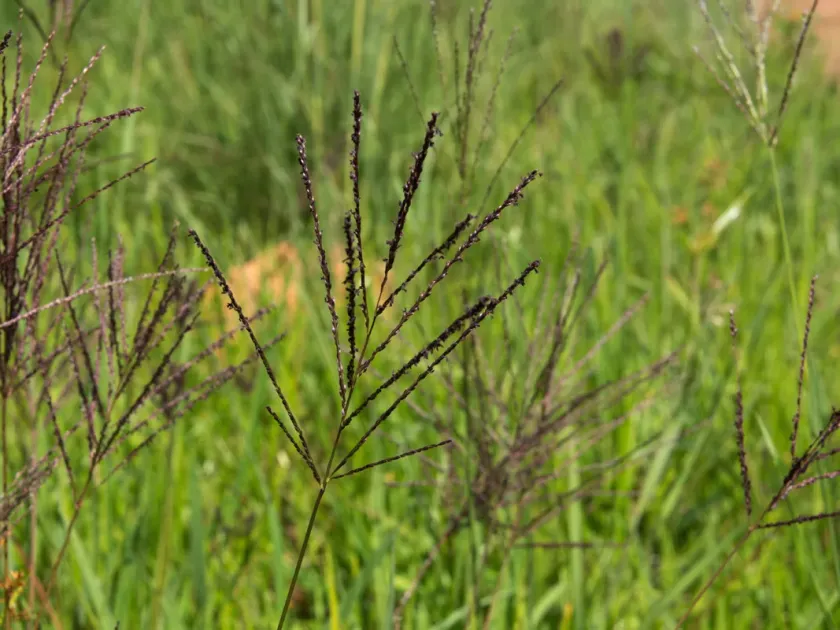
Description
Growing requirements
Digitaria gazensis is a perennial grass belonging to the Poaceae family. Originating from sub-Saharan Africa, this species is well-regarded for its resilience and ability to thrive in diverse ecological niches, particularly in savanna-type environments.
The plant exhibits excellent adaptation to poor soils, including those with low nutrient content or sandy textures. Unlike many conventional fodder crops, it maintains a steady growth rate in challenging conditions, provided that sunlight is abundant and temperatures are warm.
Climate requirements for this species are centered around its preference for tropical and subtropical zones. It is highly drought-tolerant, utilizing a deep and efficient root system to extract moisture from deeper soil layers when surface water is scarce.
Agricultural practices for this grass focus on managing its rapid expansion through stolons. Proper spacing and controlled grazing are essential to maintain the productivity of the pasture and prevent the stand from becoming too dense or overgrazed.
Economically, Digitaria gazensis is primarily used as a pasture grass. Its ability to provide consistent green fodder throughout the growing season makes it a reliable resource for livestock farming, especially in regions where dry seasons occur regularly.
Main diseases and pests
Disease pressure in Digitaria gazensis is generally low due to its natural evolutionary adaptation to wild ecosystems. However, in poorly managed or excessively damp conditions, fungal leaf spot infections can occasionally appear, impacting overall biomass quality.
Insect pests such as locusts or various grasshoppers may pose a threat during outbreak seasons. Effective management involves regular monitoring and rotational grazing practices, which disrupt the life cycles of potential pests and help the grass stand recover more vigorously.