
Corynephorus fasciculatus
Corynephorus fasciculatus
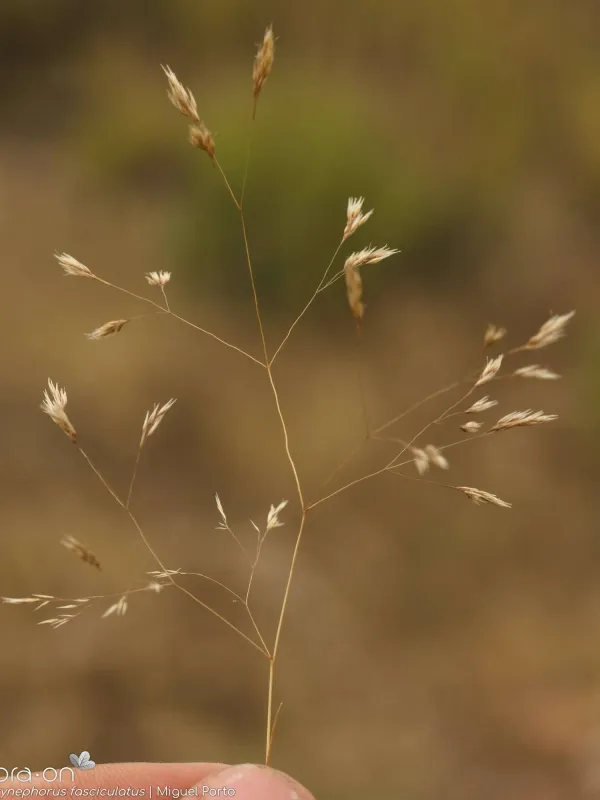
Description
Growing requirements
Corynephorus fasciculatus is a perennial grass species belonging to the Poaceae family. It is known for its remarkable ability to thrive in extremely nutrient-poor and sandy soil conditions, acting as a pioneer species in harsh environments.
The plant exhibits a high degree of drought tolerance, which is facilitated by its specialized root system and narrow, xeromorphic leaves. It is primarily found in open habitats, including coastal dunes and inland sandy soils, where high evaporation levels limit other plant species.
Cultivation of this grass requires well-drained, acidic to neutral soils. It is well-adapted to low-fertility conditions and generally does not require high levels of chemical fertilizers, as it maintains a efficient nutrient-cycling system in its biomass.
In terms of climate, the species prefers temperate to Mediterranean regions with high levels of sunlight. It is highly efficient at establishing itself on unstable soils, which makes it a preferred choice for environmental engineering and land restoration projects.
Botanically, it forms dense tufts or tussocks that provide structural stability to sandy slopes. Its inflorescences are characterized by narrow panicles with spikelets that show the distinct knob-like swelling at the articulation point typical of the genus.
Main diseases and pests
Corynephorus fasciculatus is inherently robust against many traditional agricultural pests. Its anatomical features, particularly the high silica content, act as a deterrent for many herbivorous insects, ensuring the plant's health in wild and semi-cultivated states.
The main threats to this grass arise from environmental stressors such as waterlogging, which often leads to root fungal infections. Poor soil drainage is the most significant factor that can compromise the viability of the stand.
Competition from fast-growing weeds and invasive species poses a significant risk during the establishment phase. In fertile environments, the species is often outcompeted, necessitating active management to clear the site of aggressive vegetation.
Overgrazing by livestock can cause significant mechanical damage, leading to the thinning of the grass tufts and exposure of the underlying soil to erosion. Controlled grazing regimes are essential to maintain the structural integrity of the habitat.
To prevent disease outbreaks, agriculturalists should avoid over-fertilization, as high nitrogen levels make the plants more susceptible to fungal pathogens. Maintaining adequate spacing and ensuring good airflow are key cultural practices for healthy plant populations.