
Digitaria violascens
Digitaria violascens
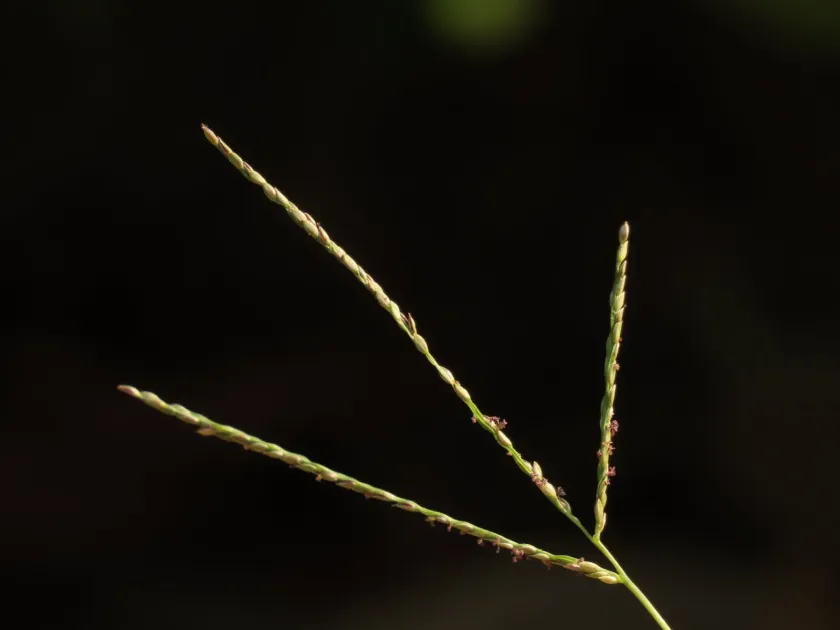
Description
Sowing dates
Digitaria violascens, commonly known as violet crabgrass, belongs to the Poaceae family. This perennial or annual grass is highly versatile and adaptable to various environmental conditions, playing a significant role in tropical and subtropical agriculture.
The sowing schedule is primarily dictated by local climate patterns. In regions with warmer climates, sowing typically begins in early spring once soil temperatures reach 12–15 degrees Celsius, ensuring optimal conditions for germination.
Adequate soil moisture is critical during the planting phase. Farmers often utilize early spring sowing to leverage residual winter moisture, which is essential for initiating robust growth in this grass species.
Seeds should be planted at a shallow depth of 1 to 2 centimeters. Compacting the soil after sowing is a standard practice to ensure proper seed-to-soil contact, which significantly improves germination rates and seedling emergence.
Planting techniques vary from traditional row sowing with 15-centimeter spacing to broadcast seeding for pasture establishment. Maintaining proper density is essential to allow the crop to effectively outcompete weeds during its initial growth stages.
Growing requirements
This species is highly heliophilic, meaning it requires abundant sunlight for optimal development. Shading, whether from trees or taller crops, tends to significantly inhibit its growth and overall biomass production.
The plant demonstrates broad adaptability regarding soil types, performing well in light sandy or loamy soils. While it can withstand temporary waterlogging, it performs best in well-drained environments.
A soil pH ranging between 5.5 and 7.0 is ideal for Digitaria violascens. On nutrient-poor or depleted soils, the crop shows a positive response to nitrogen fertilization, which accelerates its development and green mass accumulation.
Warm temperatures are essential for productivity, with the plant showing the most vigorous growth at temperatures between 20 and 28 degrees Celsius. Growth slows significantly if temperatures drop consistently below 10 degrees.
Early-stage weed management is a vital part of the agricultural process. Because the grass exhibits relatively slow growth during the first few weeks, keeping the area clear of competing species is crucial for establishing a healthy stand.
Yield
Yields of Digitaria violascens are heavily dependent on management intensity and moisture availability. Under optimal conditions, the crop produces a dense canopy suitable for multiple cuttings during a single growing season.
The plant is highly valued as a forage source for livestock, including cattle and sheep. It is particularly palatable during its vegetative stage, providing high-quality fiber and essential nutrients to grazing animals.
Due to its high resistance to trampling, it is frequently used in pasture improvement projects. Its durability makes it an ideal candidate for intensive grazing systems where ground cover preservation is a priority.
The nutritional profile can be enhanced through proper harvesting timing. By maximizing biomass production through strategic irrigation and fertilization, farmers can achieve high protein yields per hectare.
Strategic grazing management prevents overgrazing and encourages rapid regrowth. This makes the species a sustainable choice for farmers looking to maintain long-term productivity in their forage fields.
Main diseases and pests
The primary threats to Digitaria violascens stands are fungal infections, such as rust diseases, which often flourish in high-humidity conditions. These pathogens can significantly reduce photosynthetic capacity.
Pests such as cereal flies and aphids pose risks, particularly during the early growth stages, as they can damage seedlings and reduce the overall density of the crop stand.
Implementing crop rotation is the most effective preventative strategy. Avoiding monocultures and ensuring that the grass is not planted immediately following other cereals prevents the buildup of soil-borne pathogens.
Fungicide applications are rarely necessary if appropriate cultural practices are followed. Most issues can be mitigated through proper water management and ensuring that the field is not overcrowded.
Regular mowing or managed grazing helps disrupt the life cycles of common pests. By maintaining a young and active stand, the plant's natural resilience to disease and insect damage remains high.
Harvesting
Harvesting for hay should ideally occur at the onset of the flowering phase. This timing captures the best balance between total volume and the nutritional quality of the plant material.
A stubble height of at least 5 to 7 centimeters must be maintained during harvest. This promotes faster regrowth and protects the plant's sensitive growing points from heat stress and desiccation.
Using mechanical tedding during the drying process ensures that the cut material dries rapidly and uniformly. This preserves the green color and aromatic quality of the hay, which is a hallmark of good-quality fodder.
For seed production, harvesting should be performed when the spikelets begin to darken. Delaying the harvest risks significant yield losses due to the natural shattering and dispersal of seeds in the field.
Post-harvest processing includes thorough drying and winnowing to remove chaff and debris. Properly stored seeds retain high viability and germination energy for several years under cool, dry conditions.