
Digitaria atrofusca
Digitaria atrofusca
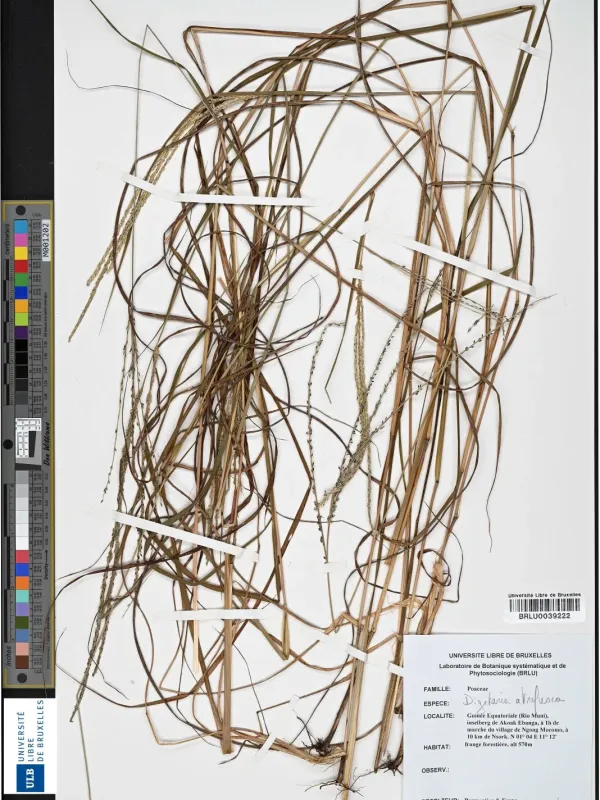
Description
Sowing dates
The sowing of Digitaria atrofusca usually coincides with the onset of the rainy season in regions where it naturally occurs. This timing is critical to ensure sufficient soil moisture for seed germination and the establishment of the primary root system.
The seeds of this plant are very small, necessitating shallow planting, typically no deeper than 1–2 centimeters. The optimal approach involves sowing into well-tilled, weed-free surface soil to minimize competition during the early developmental stages.
Sowing density should be high enough to allow the crop to form a closed canopy, which is an effective strategy for suppressing weed growth. Row planting with spacing that ensures adequate ventilation and light penetration is recommended for better stand development.
The temperature during sowing must be consistently warm, as this is a thermophilic crop. Low soil temperatures can significantly retard germination and decrease the overall percentage of seed viability, leading to sparse stands.
In traditional agricultural settings, sowing dates are adjusted according to local rainfall patterns. Farmers typically wait for the first significant rains that penetrate the soil deep enough to sustain the initial growth of the young seedlings.
Growing requirements
This crop belongs to the Poaceae family and is a typical representative of tropical and subtropical African flora. It is well-adapted to specific ecological niches, frequently appearing in moist or periodically flooded areas.
Digitaria atrofusca thrives in light, well-drained soils that retain some moisture. It performs well on nutrient-poor substrates where other cereal crops often fail, making it a valuable resource for low-input agricultural systems.
The crop requires high-intensity sunlight for healthy growth. It does not tolerate shading from trees or taller agricultural crops, so open field locations are prioritized for cultivation to ensure maximum yield potential.
The plant possesses a unique tolerance to temporary waterlogging of the soil profile. This adaptation allows the crop to be grown in river floodplains and low-lying areas where other cereals might suffer from root rot due to water stagnation.
Climate requirements include a stable warm season lasting at least 3–4 months. The plant is frost-sensitive, restricting its distribution to tropical zones where mean temperatures do not fall below the biological minimum for plant development.
Yield
The economic use of Digitaria atrofusca is primarily focused on grain production, which serves as a staple food for local populations. The nutritional quality of the grain is comparable to millet and other small-seeded cereals.
Yield capacity is highly dependent on the agronomic conditions and the consistency of rainfall. In favorable years, with optimal plant density, grain yields can reach significant levels for this group of millet-like grasses.
In addition to grain, the vegetative mass of the plant is used as livestock fodder. The leaves and stems provide a sufficient balance of proteins and carbohydrates, making them useful for grazing ruminants or as hay harvested at the end of the season.
A notable biological characteristic of the plant is the gradual ripening of its panicles. This requires careful field monitoring by farmers to minimize grain loss through shattering once the crop reaches full maturity.
Potential yield improvements are linked to breeding programs focusing on uniform maturation and lodging resistance. Even with minimal management, the crop maintains stable production, acting as a key factor in food security for arid or erosion-prone regions.
Main diseases and pests
The main pests for Digitaria atrofusca are insects common to most cereals in the region. These include various species of armyworms and stem borers that damage leaves and destroy young inflorescences during the formative period.
During the grain-filling stage, birds pose a serious threat. Since the seeds are small and nutritious, they attract flocks of wild birds, which can cause significant yield loss if no protection measures are taken.
Among fungal diseases, rust species are the most concerning as they infect both leaves and stems. Disease development is promoted by high air humidity and dense planting, which restricts air circulation within the field.
Root rots can occur in heavy soils or under conditions of poor drainage or over-irrigation. Affected plants show stunted growth, yellowing, and may die prematurely, significantly reducing the overall productivity of the cultivated area.
Integrated pest and disease management relies primarily on cultural practices: crop rotation, the elimination of weed hosts, and the selection of resistant local ecotypes that are naturally adapted to regional challenges.
Harvesting
Harvesting begins when the panicles develop a characteristic hue, indicating physiological maturity of the seeds. This typically occurs several months after sowing, once the moisture content of the grain has dropped to an acceptable level.
The traditional harvest method involves manual cutting of the panicles or mowing the entire above-ground part of the plant, followed by sun-drying. Manual labor remains dominant due to the small size of the seeds and the fragility of the spikes.
After harvesting, the panicles undergo threshing, usually by rubbing or light beating of the plant material. This separates the grain from the husks, followed by winnowing in the wind to remove lighter organic debris.
Storage of the harvest requires dry, well-ventilated facilities protected from rodents and insect pests. Properly dried grain can be stored for long periods without losing nutritional quality, which is essential for stockpiling.
Moisture control during storage is vital, as residual humidity can trigger mold growth and heating of the grain bulk. In hot climates, this requires careful handling and monitoring during the post-harvest processing phase.