
Digitaria diversinervis
Digitaria diversinervis
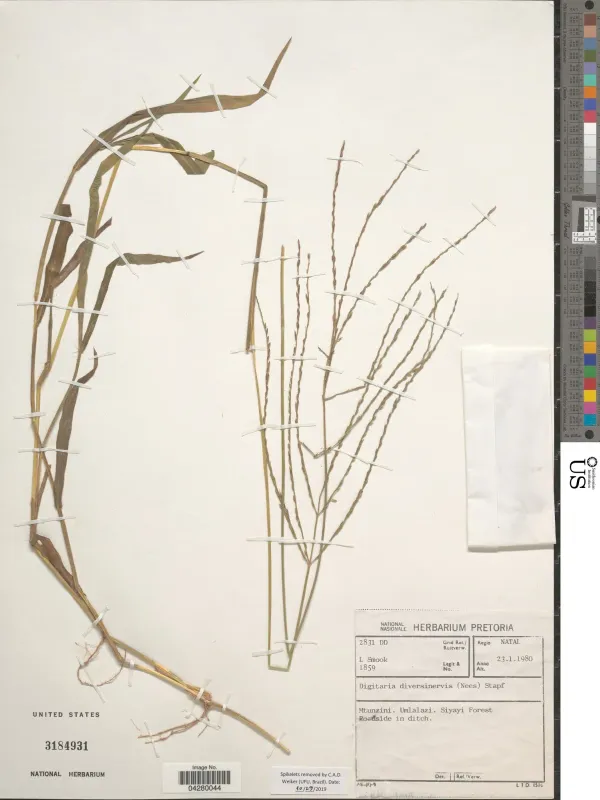
Description
Sowing dates
Digitaria diversinervis is a robust perennial grass species belonging to the Poaceae family. It is naturally adapted to regions where precipitation is seasonal, driving its growth cycle.
Successful establishment of this culture requires warm soil temperatures, typically above 18–20 degrees Celsius, which are characteristic of the onset of the wet season in its native habitats.
Seeds should be sown shallowly, at a depth of approximately 1–2 centimeters. Rolling the soil after sowing ensures better contact and improves germination rates across the field.
The plant exhibits vigorous early growth, which is a major advantage for weed suppression, allowing it to dominate the space shortly after emergence.
In organized agricultural settings, row seeding is preferred to ensure uniform distribution, which optimizes the availability of nutrients and water for every individual plant.
Growing requirements
As a thermophilic plant, Digitaria diversinervis thrives in hot climates, demonstrating excellent heat tolerance and the ability to maintain growth during high-temperature periods.
The grass is well-adapted to a variety of soil types, although it performs best in well-drained loamy soils where waterlogging is not a concern for root health.
A distinctive feature of this species is its profound drought resistance, facilitated by a deep and efficient root system capable of accessing subsurface moisture.
It displays high tolerance to various soil pH levels, making it a versatile choice for large-scale forage production across diverse geographic regions.
While relatively hardy, the plant responds positively to nitrogen fertilization, which significantly enhances the speed of regrowth after grazing or mechanical harvesting.
Yield
The primary utility of this grass lies in livestock grazing, where it provides high-quality green forage rich in energy and essential fiber for ruminants.
It possesses an exceptional ability to recover after intensive grazing, maintaining its productivity over several cycles throughout the growing season.
In addition to pasture use, the grass can be harvested for hay, provided that the timing of the cutting is managed to avoid the lignification of stems.
The dense sod formed by the plant contributes significantly to soil stabilization, preventing erosion in pasture areas while maximizing biomass yield per hectare.
Nutritionally, it remains palatable for livestock at different growth stages, which helps in maintaining consistent weight gain and milk production for grazing herds.
Main diseases and pests
Digitaria diversinervis is recognized for its high level of resistance to most common diseases that affect forage grasses, reducing the need for chemical intervention.
However, during prolonged periods of high humidity, fungal infections may occur on the leaves if the canopy density is too high, necessitating better air circulation.
Insect pests such as grasshoppers can occasionally pose a risk by feeding on the vegetative tissues, although significant infestations are generally rare.
Effective pasture management, including rotation cycles, plays a vital role in preventing the build-up of pests and pathogens within the field.
Maintaining soil health and avoiding excessive water retention are considered the most effective preventive measures to ensure the long-term viability of the crop.