

Биоорганическое нано удобрение "НАГРО" / "NAGRO"
LLC NPO "BIOPLAN"
Fertilizers
43
25
·
11.2K
1 offer
365.08 €per pack
Buy
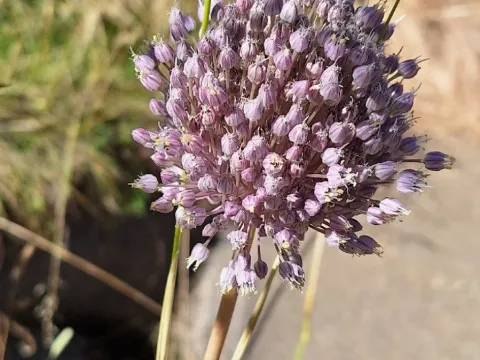
Allium L.
Onion (Allium cepa) is a widely cultivated biennial plant from the Amaryllidaceae family, typically grown as an annual crop. It is one of the most important vegetable crops globally, valued for its culinary and medicinal properties.
 Onion
Allium cepa L.
625 products
Onion
Allium cepa L.
625 products
 Garlic
Allium sativum L.
83 products
Garlic
Allium sativum L.
83 products
 Aged chives
Allium senescens L. subsp. Senescens
Aged chives
Allium senescens L. subsp. Senescens
 Allium erubescens
 K. Koch
Allium erubescens
Allium erubescens K. Koch
 Allium jesdianum
 Boiss. & Buhse
Allium jesdianum
Allium jesdianum Boiss. & Buhse
 Allium macleanii
 Baker
Allium macleanii
Allium macleanii Baker
 Allium obliquum
 L.
Allium obliquum
Allium obliquum L.
 Allium phanerantherum
 Boiss. & Hausskn.
Allium phanerantherum
Allium phanerantherum Boiss. & Hausskn.
 Allium schubertii
 Zucc.
Allium senescens
Allium senescens L. x A. tanguticum Regel
Allium schubertii
Allium schubertii Zucc.
Allium senescens
Allium senescens L. x A. tanguticum Regel
 Alpine leek
Allium victorialis L.
Alpine leek
Allium victorialis L.
 Altai onion
Allium altaicum Pall.
Altai onion
Allium altaicum Pall.
 Amethyst garlic
Allium amethystinum Tausch
Amethyst garlic
Allium amethystinum Tausch
 Ascherson onion
Allium aschersonianum Barbey
Ascherson onion
Allium aschersonianum Barbey
 Blue globe onion
Allium caeruleum Pall.
Blue globe onion
Allium caeruleum Pall.
 Blue hybrid onion
Allium caesium Schrenk x Allium caeruleum Pall.
Blue hybrid onion
Allium caesium Schrenk x Allium caeruleum Pall.
 Blue onion
Allium caesium Schrenk
Blue onion
Allium caesium Schrenk
 Broad-leaved leek
Allium nigrum L.
Broad-leaved leek
Allium nigrum L.
 Canada onion
Allium canadense L.
Canada onion
Allium canadense L.
 Chinese onion
Allium chinense G. Don x Allium thunbergii G. Don
Chinese onion
Allium chinense G. Don x Allium virgunculae F. Maek. & Kitam. var. kiiense Murata
Chinese scallion
Allium chinense x Allium fistulosum
Chinese onion
Allium chinense G. Don x Allium thunbergii G. Don
Chinese onion
Allium chinense G. Don x Allium virgunculae F. Maek. & Kitam. var. kiiense Murata
Chinese scallion
Allium chinense x Allium fistulosum
 Chives
Allium schoenoprasum L.
Chives
Allium schoenoprasum L.
 Chloranthum onion
Allium chloranthum Boiss.
Chloranthum onion
Allium chloranthum Boiss.
 Drooping onion
Allium nutans L.
Drooping onion
Allium nutans L.
 Dumebuchum onion
Allium dumebuchum H. J. Choi
Dumebuchum onion
Allium dumebuchum H. J. Choi
 Dutch garlic
Allium hollandicum R. M. Fritsch
Dutch garlic
Allium hollandicum R. M. Fritsch
 Egyptian onion
Allium xproliferum (Moench) Schrad. ex Willd. x Allium fistulosum L.
Egyptian onion
Allium x proliferum (Moench) Schrad. ex Willd.
Egyptian onion
Allium xproliferum (Moench) Schrad. ex Willd. x Allium fistulosum L.
Egyptian onion
Allium x proliferum (Moench) Schrad. ex Willd.
 Field garlic
Allium oleraceum L.
Field garlic
Allium oleraceum L.
 Fragrant garlic
Allium ramosum L.
Fragrant garlic
Allium ramosum L.
 Garlic chives
Allium tuberosum Rottler ex Spreng.
Garlic chives
Allium tuberosum Rottler ex Spreng.
 Giant onion
Allium giganteum Regel
Giant onion
Allium giganteum Regel
 Golden Garlic
Allium moly L.
Golden Garlic
Allium moly L.
 Great-headed garlic
Allium ampeloprasum L.
Great-headed garlic
Allium ampeloprasum L.
 Hybrid garlic chives
Allium tuberosum Rottler ex Spreng. x Allium victorialis L.
Hybrid garlic chives
Allium tuberosum Rottler ex Spreng. x Allium victorialis L.
 Hybrid of Dutch onion and karatavian onion
hybrids between Allium hollandicum R. M. Fritsch and Allium karataviense Regel
Hybrid of Dutch onion and karatavian onion
hybrids between Allium hollandicum R. M. Fritsch and Allium karataviense Regel
 Hybrid onion
Allium hybr.
Hybrid Onion Tel-Aviv x Ascherson
Allium tel-avivense x Allium aschersonianum
Hybrid onion
Allium hybr.
Hybrid Onion Tel-Aviv x Ascherson
Allium tel-avivense x Allium aschersonianum
 Karatau garlic
Allium karataviense Regel
Karatau garlic
Allium karataviense Regel
 Kiiense maiden leek
Allium virgunculae F. Maek. & Kitam. var. kiiense Murata
Kiiense maiden leek
Allium virgunculae F. Maek. & Kitam. var. kiiense Murata
 Leek
Allium porrum L.
Leek
Allium porrum L.
 Litvinov's onion
Allium litvinovii Drobow ex Vved.
Maiden leek
Allium virgunculae F. Maek. & Kitam.
Nutans onion
Allium nutans L. x Allium senescens L.
Litvinov's onion
Allium litvinovii Drobow ex Vved.
Maiden leek
Allium virgunculae F. Maek. & Kitam.
Nutans onion
Allium nutans L. x Allium senescens L.
 Onion
Allium cepa L. var. cepa
Onion
Allium cepa L. var. cepa
 Ozhanin onion
Allium oschaninii O. Fedtsch.
Ozhanin onion
Allium oschaninii O. Fedtsch.
 Pskem onion
Allium pskemense B. Fedtsch.
Rakkyo
Allium chinense G. Don
Pskem onion
Allium pskemense B. Fedtsch.
Rakkyo
Allium chinense G. Don
 Ramsons
Allium ursinum L.
Ramsons
Allium ursinum L.
 Sand leek
Allium scorodoprasum L.
Senescent onion
Allium senescens L.
Sand leek
Allium scorodoprasum L.
Senescent onion
Allium senescens L.
 Senescent onion
Allium senescens L. subsp. montanum (Pohl) Janch. ex Soó
Senescent onion
Allium senescens L. subsp. montanum (Pohl) Janch. ex Soó
 Shallot
Allium ascalonicum L.
Shallot
Allium ascalonicum L.
 Shallot
Allium cepa L. var. aggregatum G. Don
Shallot
Allium cepa L. var. aggregatum G. Don
 Siberian chive
Allium senescens L. subsp. senescens x A. tanguticum Regel
Siberian chive
Allium senescens L. subsp. senescens x A. tanguticum Regel
 Star of Persia
Allium cristophii Trautv.
Star of Persia
Allium cristophii Trautv.
 Tangut onion
Allium tanguticum Regel
Tel-Aviv onion
Allium tel-avivense Eig
Tangut onion
Allium tanguticum Regel
Tel-Aviv onion
Allium tel-avivense Eig
 Three-cornered leek
Allium triquetrum L.
Three-cornered leek
Allium triquetrum L.


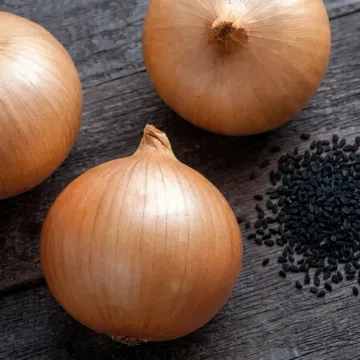

Planting methods vary by region, utilizing either direct seeding, planting sets (small immature bulbs), or transplanting greenhouse-grown seedlings. The choice depends on the length of the growing season and the target bulb size.
In temperate climates, planting sets is the most common approach for amateur and small-scale farmers as it guarantees a harvest even in shorter summer periods. Direct sowing requires specialized equipment to ensure accurate seed depth and spacing.
Seeds should be sown at a depth of 1-2 centimeters in well-prepared soil. Proper spacing (10-15 cm between plants) is essential to prevent overcrowding, which can lead to smaller bulb sizes and higher disease risk.
Timing the sowing correctly is vital; planting too early in cold soil can lead to premature bolting, while planting too late may not provide enough time for proper bulb maturation before the onset of autumn rains.
Onions are highly sensitive to day length and light intensity. Photoperiodic sensitivity determines when the bulb begins to form, making the choice of variety appropriate for the specific latitude crucial for success.
The crop thrives in well-drained, fertile, sandy loam soils with a pH between 6.0 and 7.0. Soils with high organic matter content are preferred to maintain consistent moisture levels during the active growth phase.
Adequate water is critical during the bulb development stage, but it should be restricted as the harvest approaches. Excess moisture during the late growth phase can lead to fungal infections and poor bulb storage quality.
Onions require a temperate climate. While they are frost-tolerant in early stages, the optimal temperature for bulb development is between 15 and 25 degrees Celsius, with dry weather being ideal for maturation.
Weed management is a top priority in onion farming. Due to their sparse foliage, onions cannot effectively compete with weeds, which can quickly overwhelm the crop and drastically reduce yields.
Global onion production is characterized by high yields, typically ranging from 40 to 80 tons per hectare in intensive farming systems using modern hybrid varieties and drip irrigation.
Yield is significantly impacted by plant density, fertility management, and the control of soil-borne pathogens. Precision agriculture allows growers to monitor crop health and optimize nutrient delivery for maximum output.
High-quality yields are defined by uniform bulb size, firmness, and the condition of the outer dry skin, which acts as a protective barrier against external pathogens during storage.
The transition from manual to mechanized harvesting has greatly increased efficiency, allowing for large-scale production that meets the requirements of international markets and supermarkets.
Proper nutrient management, especially balancing nitrogen, phosphorus, and potassium, is essential to ensure that bulbs reach their full potential mass without compromising their shelf life or resistance to disease.
Downy mildew (Peronospora destructor) is the most destructive disease for onion crops, thriving in humid, cool conditions and capable of causing total crop failure if left untreated.
The onion maggot is a significant insect pest that feeds on the roots and bulbs, causing wilting and death of young plants. Crop rotation is the primary defense strategy against this pest.
Thrips are another major concern, causing silvering of leaves and significant yield loss by weakening the plant and promoting the spread of secondary viral infections.
Neck rot (Botrytis spp.) is a primary post-harvest concern, often entering the bulb through the neck during curing and developing into a soft rot during storage.
Harvesting should begin when 50% to 80% of the foliage has naturally fallen over. This indicates that the bulbs have stopped growing and are ready to enter the curing phase.
Post-harvest curing is essential for long-term storage. Onions are left on the field or moved to a ventilated shed to dry, allowing the outer skins to papery and the neck to seal completely.
After curing, the tops are trimmed, leaving about 3-5 centimeters of the neck to prevent pathogens from entering the bulb core during storage.
Bulbs must be stored in cool, dry conditions with high airflow. Consistent temperature control (near 0 degrees Celsius for long-term storage) helps maintain dormancy and prevents sprouting.
Careful handling during all harvest and post-harvest stages is required to avoid bruising, as any mechanical damage serves as an entry point for fungal and bacterial infections.