
Litvinov's onion
Allium litvinovii Drobow ex Vved.
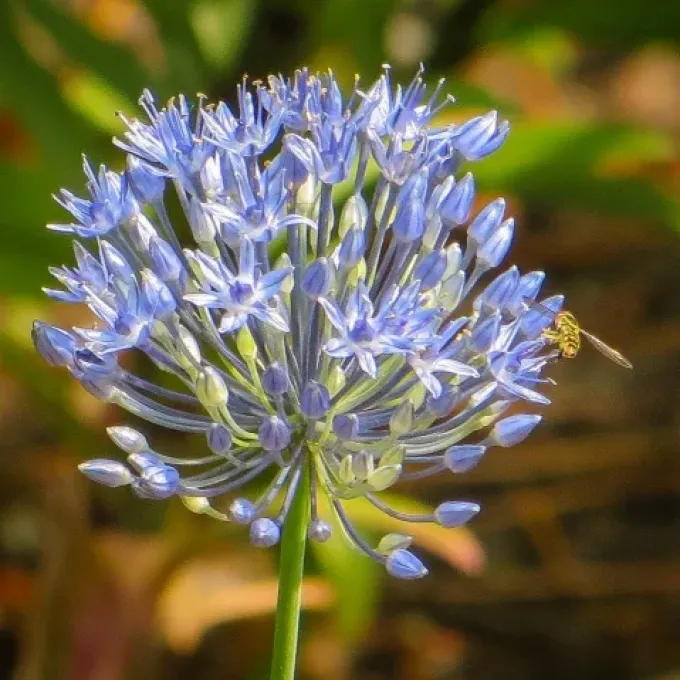
Description
Growing requirements
Litvinov's onion (Allium litvinovii) belongs to the Amaryllidaceae family and is a perennial herbaceous plant native to the arid regions of Central Asia. It is specifically adapted to survival in harsh desert and semi-desert environments.
The plant is classified as a xerophyte, meaning it has evolved biological mechanisms to thrive in environments with limited water availability. Its natural habitat includes sandy dunes, saline areas, and clay soils where other conventional crops fail to establish.
Botanically, the plant features a bulb that acts as a storage organ, allowing it to remain dormant during extreme heat and drought. The foliage is typically slender, designed to reduce transpiration and conserve moisture throughout the growing season.
Cultivation requirements involve highly permeable sandy soils and full sun exposure. Drainage is the most critical factor, as stagnant water and high humidity can lead to root rot and other physiological stressors, making it unsuitable for wet climates.
Beyond its scientific interest, Allium litvinovii is studied for its potential in soil stabilization. Its deep and resilient root system helps in binding sandy soils, which makes it a candidate for environmental restoration projects in arid zones.