
Shallot
Allium ascalonicum L.
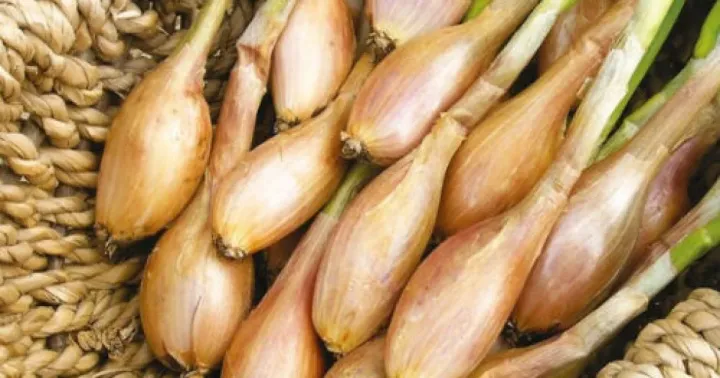
Description
Sowing dates
The shallot, scientifically known as Allium ascalonicum L., belongs to the Amaryllidaceae family. It is typically grown as an annual or biennial crop depending on the climate and production goals.
The most common method of propagation is vegetative, utilizing the division of shallot clusters. Planting is best performed in early spring as soon as the soil is workable and reaches a temperature of 5–8 degrees Celsius.
In regions with milder winters, fall planting is an option, provided that the soil is well-drained and the crop is adequately protected with mulch to prevent frost damage to the bulbs.
When planting, it is crucial to space the clusters properly to allow for expansion. Each cluster typically consists of several bulbils that will grow into a full harvestable clump by the end of the season.
Implementing a strict crop rotation plan, ensuring that alliums do not return to the same plot for at least three to four years, is essential to minimize the risk of soil-borne diseases.
Growing requirements
Shallots thrive in fertile, well-drained loamy or sandy soils with a neutral pH level. They are highly sensitive to waterlogged conditions, which can quickly cause the bulbs to rot.
Full sun exposure is a non-negotiable requirement for this crop. Sufficient light intensity is necessary to trigger bulb formation and ensure proper maturity before the end of the growing season.
The plant performs best in a moderate climate with temperatures ranging between 18 and 22 degrees Celsius. Extreme heat during the late stages of growth can force premature dormancy.
Consistent moisture is required during the initial vegetative growth phase. However, irrigation must be strictly controlled or stopped entirely once the bulbs start to mature to improve shelf life.
While the crop requires nutrients for growth, excessive nitrogen application should be avoided, as it encourages foliage growth at the expense of bulb density and storage longevity.
Yield
The yield of shallots is primarily determined by the number of bulbils per cluster and the overall soil fertility. On average, producers can expect 1.5 to 3 kilograms per square meter.
A significant advantage of this crop is its high multiplication rate, where one planted bulb produces a cluster of 8 to 15 new bulbs, ensuring high efficiency for seed stock production.
To maximize yields, weed control is essential, as shallots are poor competitors and will suffer significantly from competition for light and nutrients in weedy conditions.
Monitoring for signs of nutrient deficiency and performing precise fertilizing can help increase the size and uniformity of the harvested bulbs, which are key market quality indicators.
The culinary value of the shallot is high due to its mild flavor profile and lower water content compared to standard onions, which results in a more concentrated culinary performance.
Main diseases and pests
The onion maggot represents a severe threat to shallot cultivation. The larvae feed on the roots and bulbs, leading to yellowing foliage and the total loss of the infested cluster.
Downy mildew, caused by Peronospora destructor, is a common fungal threat that thrives in humid, cool conditions, potentially defoliating the crop before bulbs reach maturity.
Neck rot (Botrytis spp.) is a post-harvest disease that often occurs when the bulbs are not properly cured, leading to massive losses during the storage period.
Integrated pest management, including the use of certified disease-free planting stock and proper spacing to allow airflow, is the most effective strategy for mitigation.
Scouting for early symptoms of thrips and fungal infections allows for targeted interventions, reducing the need for broad-spectrum chemical applications.
Harvesting
The harvest timing is indicated by the foliage. When approximately two-thirds of the leaves turn yellow and begin to collapse naturally, the bulbs are ready for extraction.
Harvesting should ideally be done on a dry day to prevent soil from sticking to the bulbs and to facilitate a faster initial drying process in the field.
Post-harvest curing is critical for shallots. They must be placed in a shaded, well-ventilated area for several weeks until the neck is completely shriveled and dry.
After the curing process, the dried foliage can be trimmed, leaving about 3 centimeters of the stem, and the bulbs should be cleaned of loose debris and soil.
Properly cured and stored in a cool, dry environment, shallots can remain in excellent condition for many months, making them a highly durable and valuable kitchen staple.