
Golden Garlic
Allium moly L.
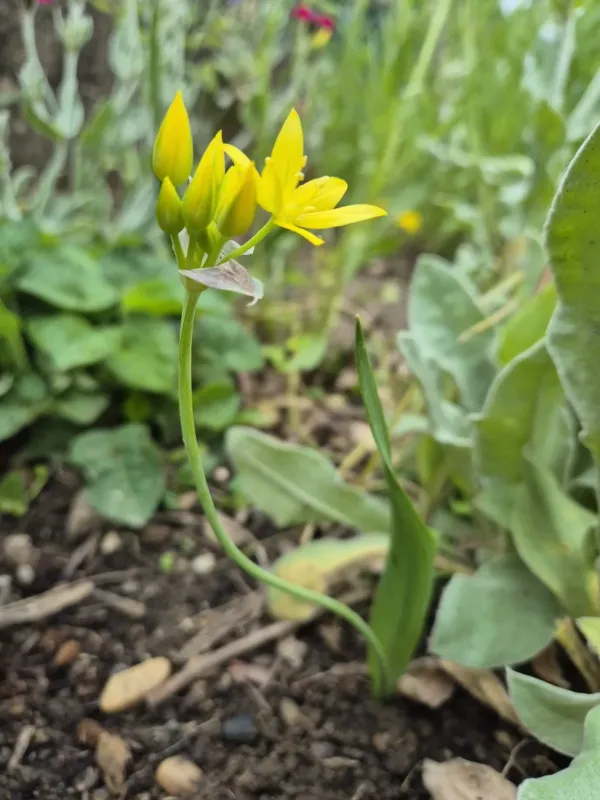
Description
Sowing dates
Planting Allium moly bulbs is most effective during the autumn months, ensuring they have sufficient time to establish roots before the ground freezes.
While spring planting is an alternative, it may result in a weaker display of the iconic golden-yellow star-shaped flowers during the initial growth season.
The recommended planting depth is approximately 3 to 4 inches, ensuring the bulbs are placed in loose, well-draining soil to prevent winter rot.
Spacing between bulbs should be kept around 4 to 6 inches, allowing enough room for the clumps to expand naturally over subsequent growing years.
Once planted, covering the site with a light layer of mulch can help moderate soil temperature and suppress early weed growth in the spring.
Growing requirements
This bulbous perennial from the Amaryllidaceae family thrives in full sun but maintains good resilience in partial shade conditions, especially in warmer climates.
Soil drainage is the most critical factor for success; the plant performs best in light, sandy, or gritty soils with a neutral to slightly alkaline pH.
While tolerant of occasional dry spells, the plant appreciates consistent moisture during its spring vegetative growth phase to support its vibrant bloom.
Allium moly is hardy across many zones and generally does not require complex fertilization if the soil is amended with organic matter at the time of planting.
The plant exhibits an excellent naturalizing habit, gradually forming dense clusters that are highly attractive in rock gardens or as naturalized border edges.
Main diseases and pests
Root rot, often caused by excessive dampness or standing water during the winter months, remains the primary threat to the longevity of the bulbs.
Onion maggots are a common pest that can cause significant damage to the root system, often leading to the sudden wilting and death of the plant.
Fungal issues like Botrytis or various types of downy mildew may appear if airflow around the foliage is restricted during periods of high humidity.
Good sanitation practices, such as removing dead or dying foliage at the end of the season, are essential to reduce the risk of overwintering pathogens.
If an infestation occurs, targeted organic pesticides or changing the local drainage conditions can help restore the health of the bulb cluster effectively.