
Alpine leek
Allium victorialis L.
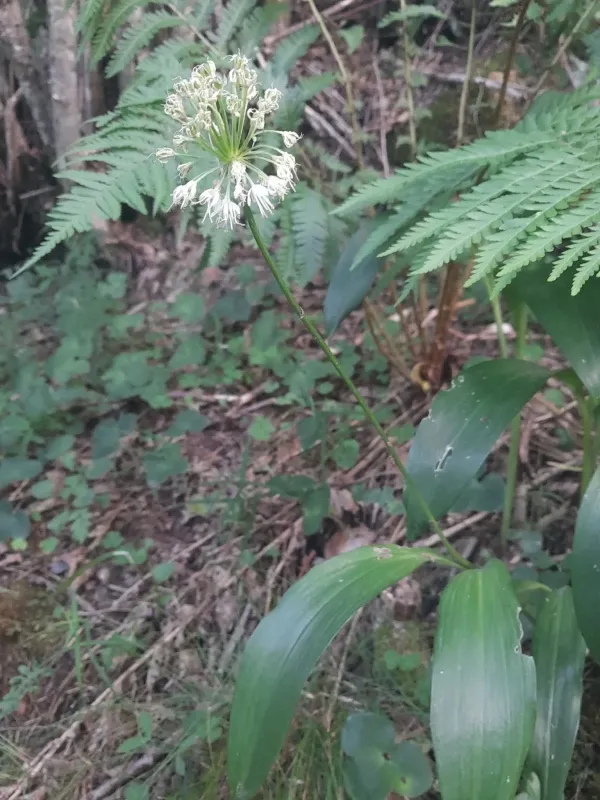
Description
Sowing dates
Seeds of Allium victorialis require a prolonged period of cold stratification, making late autumn the ideal time for direct outdoor sowing.
If sowing in the spring, seeds must be kept in moist conditions at low temperatures (around 0–5°C) for at least three months to break dormancy.
The seeds should be sown at a shallow depth of approximately 1 cm in well-prepared, moisture-retentive seedbeds.
Germination is notably slow and sporadic, often taking several weeks to complete, which necessitates keeping the soil consistently damp.
During the first year, seedlings grow very slowly and form only a small bulb, requiring patience and careful weed management by the grower.
Growing requirements
Alpine leek is a long-lived perennial of the Amaryllidaceae family, naturally adapted to cool, shady, and moist forest environments.
The crop thrives in rich, organic-heavy, and slightly acidic soils that provide excellent drainage while retaining necessary moisture.
Exposure to full, direct sunlight should be avoided, as it can cause leaf scorching and reduce the quality of the harvested produce.
This species is exceptionally winter-hardy and can withstand significant frost, making it suitable for cultivation in challenging northern climates.
Soil fertility is critical for high yields; regular applications of well-rotted manure or leaf compost are recommended to mimic its natural woodland habitat.
Yield
The yield of Allium victorialis is relatively low in the early years; a commercial harvest should not be expected until the third or fourth year of growth.
Mature, well-established beds can produce a consistent yield of succulent leaves, though careful management is required to sustain plant vigor.
Plants expand primarily through vegetative division, forming dense clusters of bulbs that can be divided to create new production areas.
Total harvest volume depends on plant density, with optimal spacing allowing for sufficient development of both the underground bulbs and foliage.
To maintain long-term productivity, growers must ensure that at least 50% of the foliage remains intact after the harvest to nourish the bulb.
Main diseases and pests
The main threats to this crop include fungal pathogens such as rust and downy mildew, particularly in seasons with high humidity and poor ventilation.
Onion maggots (larvae of the onion fly) pose a significant risk to the bulbs, often causing stunted growth and death of the plant during the spring.
Root rot can occur if the soil remains waterlogged for extended periods, especially in heavy clay substrates that lack proper organic matter.
Integrated pest management (IPM) strategies, including crop rotation and the use of physical barriers, are the most effective ways to control these issues.
Because the foliage is consumed early in the season, chemical pesticide use is strongly discouraged, favoring organic and biological solutions instead.
Harvesting
The harvest season for Alpine leek occurs in early spring, precisely when the fresh green leaves emerge and before the plant enters its flowering stage.
Harvesting is performed by carefully cutting the leaves a few centimeters above the soil level to prevent damage to the bulb's growth point.
Leaves can be consumed fresh, or preserved through pickling and drying, which are common methods for extending the usability of the crop.
Excessive harvesting from the same clump must be avoided to ensure that the plant stores enough energy for dormancy and the subsequent growing season.
Once the summer heat arrives, the leaves begin to yellow and wither, marking the end of the harvest window as the plant moves into its resting phase.