
Shallot
Allium cepa L. var. aggregatum G. Don
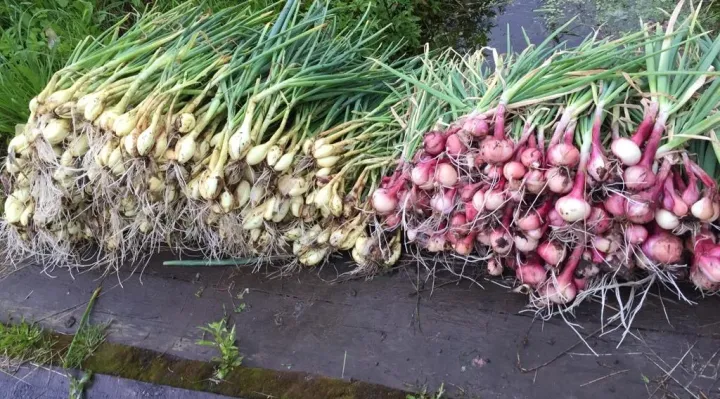
Description
Sowing dates
Shallots are primarily propagated vegetatively by planting sets, as seeds are rarely used unless breeding new varieties or in specific commercial nursery conditions.
The planting time depends on the climate; in temperate zones, early spring is preferred as soon as the soil is workable and has warmed up to about 5–10 degrees Celsius.
In regions with mild winters, planting can be done in late autumn, allowing the bulbs to establish root systems before the dormant period and ensuring an earlier harvest.
When planting, place the bulbs with the pointed end upwards, leaving enough space between rows—usually 20 to 30 cm—to allow for weeding and proper air circulation.
Shallots require a firm but well-drained soil bed. Planting depth should be approximately 3–5 cm, ensuring the tip of the bulb is just covered with soil.
Growing requirements
Shallots thrive in full sun, requiring at least 6–8 hours of direct sunlight per day to develop fully and produce healthy bulbs with dense structure.
Soil quality is paramount; they prefer fertile, well-draining sandy loam or loamy soils with a neutral pH level between 6.0 and 7.0 for optimal growth.
Excessive nitrogen fertilization should be avoided, as it encourages excessive leaf growth at the expense of bulb development and can increase susceptibility to diseases.
Consistent moisture is needed during the active growth phase, but it is vital to reduce irrigation as the bulbs approach maturity to prevent rotting and improve storage life.
Proper aeration is essential. Regular shallow hoeing between the rows helps suppress weeds and allows the soil to breathe, which is crucial for healthy bulb formation.
Yield
Shallots are highly productive, as each bulb planted typically multiplies to form a cluster containing 5 to 12 individual bulbs by the end of the season.
Yield varies based on soil fertility and cultivar, with an average yield ranging from 1.5 to 4 kg per square meter under well-managed agricultural conditions.
To maximize size, some gardeners choose to remove soil from around the bulb clusters in mid-summer, exposing them to more light and heat to improve ripening.
Proper management of the plants ensures that the harvest remains consistent, providing high-quality bulbs that are prized for their delicate flavor and shelf life.
High-yield cultivars have been developed to produce larger individual bulbs, making them more suitable for commercial kitchen use and easier to prepare.
Main diseases and pests
Onion maggots are the most significant pest, as their larvae feed on the roots and the base of the bulbs, causing the entire plant to wilt and collapse rapidly.
Downy mildew is a major threat in humid or cool conditions, characterized by pale or yellow spots on leaves which can lead to reduced bulb size and overall yield loss.
Thrips can also infest shallot foliage, feeding on the green parts and causing the leaves to silver or curl, which stresses the plant and inhibits development.
Basal rot caused by Fusarium fungi is a persistent problem, especially in waterlogged soils, leading to a breakdown of the bulb tissue during storage.
Preventative measures include crop rotation every 3–4 years and ensuring that only clean, disease-free sets are used for planting at the start of the season.
Harvesting
Harvesting should occur when the foliage begins to yellow, dry out, and tip over naturally, indicating that the bulb development process is complete.
It is crucial to harvest during dry weather to ensure that the bulbs are not damp, which is essential for curing and long-term storage success.
After lifting the clusters from the ground, they should be left to cure in a dry, ventilated spot for several days to allow the outer skins to toughen.
Once cured, the leaves can be trimmed or braided for storage. Keeping them in a cool, dark, and dry area with good airflow will help preserve them for months.
Properly stored shallots are highly durable and can provide a stable supply of fresh ingredients for culinary use throughout the winter and early spring months.