
Hybrid of Dutch onion and karatavian onion
hybrids between Allium hollandicum R. M. Fritsch and Allium karataviense Regel
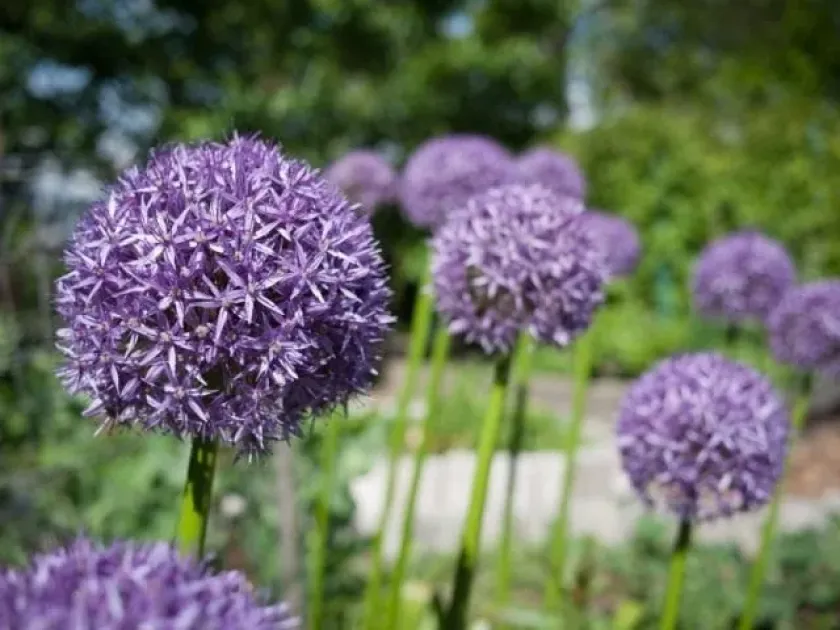
Description
Sowing dates
Planting the bulbs of this interspecific hybrid in open ground should be carried out during the autumn season. The optimal time is late September or October, when the soil temperature drops to 10–12°C, ensuring successful root establishment before the ground freezes.
Early planting must be avoided to prevent premature green growth, which is susceptible to frost damage. In regions with harsh winters, covering the planting area with peat or dry leaves is recommended to protect the bulb from deep soil freezing.
The planting depth depends on the bulb size and soil texture. A standard rule is to plant the bulb at a depth equal to three times its diameter, which provides stability and protection against extreme temperature fluctuations during the dormant phase.
The spacing between plants should be between 20 and 30 centimeters. This interval is essential for maintaining proper air circulation, which is a crucial factor in preventing fungal diseases in both the foliage and the root system.
Propagation is primarily performed through vegetative division of the bulb clusters. While seeds can be produced, the resulting offspring often show high genetic variation, losing the specific ornamental traits of the primary hybrid.
Growing requirements
This hybrid thrives in well-drained, fertile soils with a neutral or slightly alkaline pH. Waterlogging is strictly discouraged, as it leads to basal rot and rapid decay of the bulb, which is often fatal to the plant.
The plant requires full sun exposure for the majority of the day to reach its full potential. Growing in partial shade often results in weak stems and pale-colored inflorescences, significantly reducing the plant's ornamental appeal.
The soil should have a light, airy structure. In heavy clay soils, it is necessary to improve aeration by incorporating sand, perlite, or organic compost, which ensures proper root respiration during the active growth period.
Moderate watering is required during the active vegetative season. However, once the foliage dies back, the bulbs enter a period of rest and prefer dry conditions, so irrigation should be completely suspended during this time.
Fertilization should be applied in stages: nitrogen-rich fertilizers in early spring to support foliage growth, and phosphorus-potassium fertilizers during the budding phase to ensure strong inflorescences and plant immunity.
Main diseases and pests
Grey mold (Botrytis) and Fusarium are the most prevalent diseases, often triggered by excessive moisture and poor air circulation. These pathogens can rapidly infect the bulb tissue, causing decay and plant loss.
The onion fly is a major pest, as its larvae feed on the internal parts of the bulb. Infested plants show yellowing and wilting, and if untreated with insecticides, the entire bulb cluster can be destroyed within a few weeks.
Root mites are another significant threat, especially in warm and humid climates. They infest the basal plate of the bulb, creating entry points for secondary bacterial infections that lead to a complete loss of plant vigor.
Adhering to crop rotation is the best preventive measure; bulbs should not be planted in the same soil more frequently than once every four years to break the cycle of specialized soil-borne pests and diseases.
Proper sanitation is essential after the growing season. All plant residues should be removed and destroyed to prevent pathogens from overwintering in the soil, which helps maintain a healthy growing environment for the next cycle.
Harvesting
Harvesting should only occur after the foliage has fully dried and turned brown, indicating that all nutrients have been translocated back into the bulb for dormancy. Harvesting too early results in poor quality and storage issues.
After lifting, the bulbs must be cleaned of soil and cured in a shaded, well-ventilated area for approximately 10 days. Once cured, they should be sorted and stored in a cool, dry place until the next planting season.
If grown for landscaping, the bulbs can remain in the ground for several years. However, after 3–4 years, the clusters tend to become overcrowded, which negatively impacts flowering, making bulb division a necessary maintenance task.
Division and replanting are best conducted in late summer when the plants are in their deepest state of dormancy. This minimizes stress and allows the bulbs to settle before the onset of autumn rains or winter temperatures.
Storage conditions require a stable temperature, ideally between 15–18°C, and low humidity. Proper ventilation is vital to prevent fungal growth on the bulbs and to stop the buds from waking up prematurely.