
Blue hybrid onion
Allium caesium Schrenk x Allium caeruleum Pall.
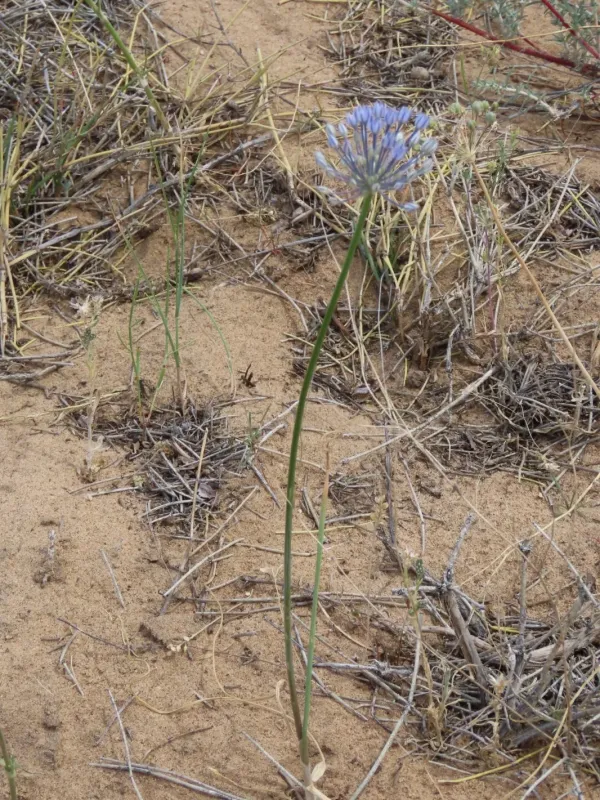
Description
Sowing dates
Sowing seeds of the Blue hybrid onion is typically carried out in the autumn or early spring after cold stratification of the seed material. The optimal planting depth is 1 to 1.5 centimeters in light, well-drained soil.
To speed up germination, it is recommended to pre-soak seeds in a growth stimulant solution for several hours. Seedlings emerge at soil temperatures between +12 and +15 degrees Celsius, making spring sowing preferable in regions with severe winters.
It is important to follow a spacing pattern, leaving about 20–25 centimeters between rows to ensure sufficient nutrition area for each plant. In the first year, the crop forms a leaf rosette while intensively developing its root system.
Using container methods to grow seedlings is also justified for obtaining stronger bulbs before transplanting into open ground. Planting seedlings in their permanent location is carried out at the 3–4 true leaf stage.
Regular watering during the germination phase is critical; however, once established, the crop demonstrates high resistance to short-term drought periods.
Growing requirements
This crop is a member of the Amaryllidaceae family and belongs to the group of ornamental onions. In its natural environment, its range covers the arid steppe and foothill regions of Central Asia, which determined the plant's basic environmental requirements.
The onion prefers open, sunlit areas, as shade can cause flower stalks to deform and lose color intensity. The plant is extremely sensitive to excessive soil moisture and waterlogging, which can lead to bulb rot.
Optimal soils for this species are light sandy loam or loamy substrates with a neutral or slightly alkaline reaction. It is important to ensure high-quality drainage, especially in areas with heavy clay content.
The plant has high frost resistance, characteristic of species originating from climate zones with sharp temperature fluctuations. It successfully withstands frosts down to -25 degrees if there is snow cover or a layer of mulch.
During the active vegetation period, the crop responds positively to complex mineral fertilizers, although excess nitrogen can provoke excessive leaf development at the expense of flowering.
Yield
The economic use of this hybrid is focused mainly on landscape design and the floral business. Yield in this context is measured by the number of high-quality flower stalks suitable for cutting.
With proper agronomy, one mature plant can form 3 to 5 full-fledged inflorescences that retain their decorative quality for 2–3 weeks. It is important to consider that maximum productivity is achieved in the 3rd or 4th year after planting.
To maintain stable flower stalk yield, it is necessary to perform annual hilling and control planting density. Overcrowded clumps can reduce product quality, so they should be divided every 4–5 years.
Inflorescences are harvested at the half-bloom stage, when the lower flowers in the umbel have already opened. This allows for maximizing the shelf life of the cut material in a vase.
The use of modern growth regulators helps increase the height of the flower stalk, which significantly raises the market characteristics of the onion in the floral market.
Main diseases and pests
The most dangerous disease for the crop is onion rot, which occurs when the water regime is disturbed. Fungal infections such as Fusarium can attack the bulb base, leading to the death of the entire plant during the season.
Among pests, the onion fly causes the most damage by laying eggs at the base of leaves. Larvae penetrate the plant tissues, causing yellowing and wilting of the leaves in early spring.
To combat insects, preventive dusting of the soil with wood ash or the use of systemic insecticides upon first signs of pest activity is recommended.
Disease prevention consists of crop rotation and thorough drying of bulbs after harvest. It is also important to avoid injuring the bulb base during cultivation around the bush.
To prevent the spread of infections, all affected specimens should be immediately removed from the field and disposed of by burning outside the cultivation zone.
Harvesting
Harvesting bulbs for storage or transplanting is carried out at the end of the growing season, when the above-ground part of the plant has completely dried and turned a yellow-brown color.
Work is best done in dry, sunny weather to prevent rot development during storage. Bulbs are carefully dug up with forks, trying not to damage the root system or outer tunics.
After removal from the soil, the bulbs must be dried for 7–10 days in a ventilated, shaded area. This promotes the formation of protective scales and the transition of nutrients into the bulb.
After drying, they are cleaned of soil and root residues, and sorted by size for further use. Smaller bulbs can be used for growing on in beds with higher planting density.
Storage is carried out at 15–18 degrees in dry rooms with good ventilation, eliminating the risk of sharp humidity fluctuations.