
Drooping onion
Allium nutans L.
Description
Sowing dates
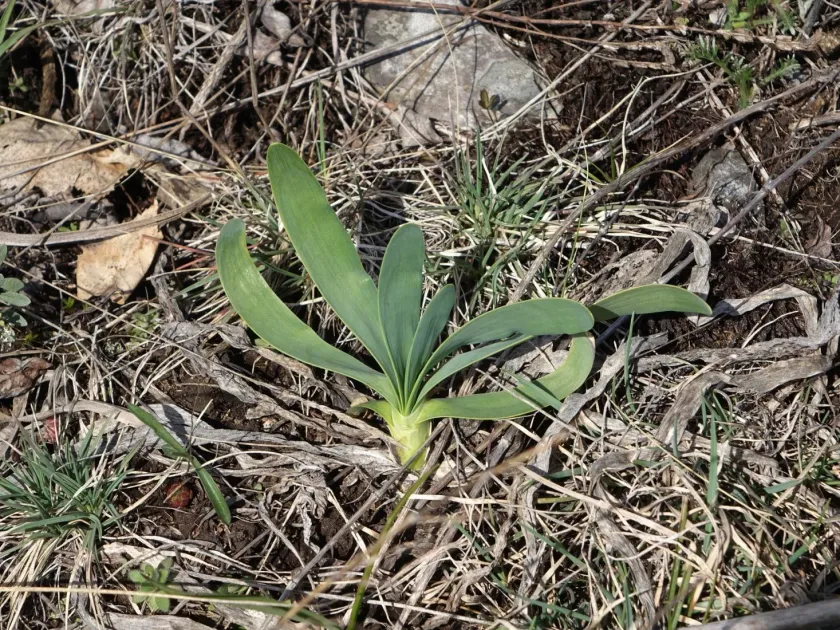
Drooping onion (Allium nutans L.) is a hardy perennial belonging to the Amaryllidaceae family. It is recognized for its flat, slightly drooping leaves and its resilient nature in various environments.
Propagation can be achieved through both seeds and rhizome division. Sowing seeds should be done in early spring or late autumn, as the seeds require a period of cool temperatures for successful germination.
For vegetative propagation, mature clumps are divided into smaller sections. Each segment must include at least one healthy growth bud and a portion of the root system to ensure successful establishment.
When planting, allow for spacing of approximately 25-30 cm between rows and 15 cm within rows. This density allows for proper airflow and prevents the development of fungal diseases during the growing season.
Seedlings develop slowly during the first year, establishing a robust root system. By the second year, the plant matures into a dense, productive clump capable of multiple harvests per season.
Growing requirements
This species is highly adaptable to various climates, demonstrating excellent frost resistance. It thrives in regions with temperate climates and cold winters, making it an ideal perennial for northern gardens.
The plant requires fertile, well-draining soil with a neutral pH level. It performs best in loamy soils enriched with organic matter, avoiding heavy clays that may cause waterlogging and root rot.
Sufficient sunlight is essential for optimal growth and nutritional density. While the plant can tolerate partial shade, full sun promotes more vibrant leaves and higher concentrations of beneficial vitamins.
Consistent moisture is key for keeping the leaves tender. During prolonged dry spells, regular irrigation is recommended to prevent the leaves from becoming tough and overly fibrous.
Maintenance involves weeding the area around the base of the plant and mulching to conserve moisture. A light application of compost in the spring provides enough nutrients to sustain healthy leaf production.
Yield
Drooping onion is prized for its early spring production. It is often one of the first greens to appear in the garden, providing a fresh source of vitamins immediately after the snow melts.
The yield potential is quite high, with the ability to harvest leaves several times throughout the growing season. Each cutting stimulates new growth, ensuring a steady supply of greens until the late autumn frosts.
Unlike some other onion varieties, the foliage remains succulent even after the appearance of flower stalks. This makes it a highly valuable crop for culinary use, providing a delicate garlic-like flavor.
To maintain high productivity, it is advised to rejuvenate the planting site every 4-5 years. Over time, the clumps become too dense, leading to smaller leaves and reduced overall vigor of the plant.
For those focused on leaf production, removing flower stalks before they bloom can redirect energy into vegetative growth, further increasing the weight of the harvestable green mass.
Main diseases and pests
The onion fly (Delia antiqua) is a primary concern for this crop. It is best controlled through crop rotation and by avoiding the use of fresh manure, which can attract the insects to the planting area.
Thrips may infest the leaves during hot, dry weather, leaving silver-colored streaks. Using insecticidal soaps or neem oil is usually effective if the infestation is caught early enough.
Downy mildew and rust are potential fungal diseases that occur in high-humidity conditions. Maintaining proper spacing between plants significantly reduces the risk of these pathogens spreading.
Snails and slugs may feed on the young, tender leaves in damp environments. Installing physical barriers or using non-toxic traps can effectively protect the plants from these mollusks.
Overall, Allium nutans is relatively robust and shows better resistance to pests than many traditional annual onions. Integrated pest management, such as encouraging beneficial insects, is usually sufficient.
Harvesting
Harvesting is done by cutting the leaves at a height of 3-5 cm above the ground. This method ensures that the central growth points remain intact for future recovery and subsequent harvests.
The leaves are rich in iron, vitamin C, and antioxidants. Because of their delicate nature, they are best enjoyed fresh in salads, soups, and sandwiches rather than processed through high-heat cooking.
After each cutting, a light watering and organic fertilization help the plant recover quickly. This simple practice ensures that the next harvest is ready within two to three weeks, depending on the temperature.
For short-term storage, leaves can be wrapped in a damp paper towel and kept in the vegetable drawer of the refrigerator. They are also suitable for freezing if they are chopped beforehand.
Drooping onion serves as both an ornamental plant and a food source. Its long, gracefully arching leaves add beauty to herb gardens while providing a constant supply of healthy, flavorful ingredients.