
Fragrant garlic
Allium ramosum L.
Description
Sowing dates
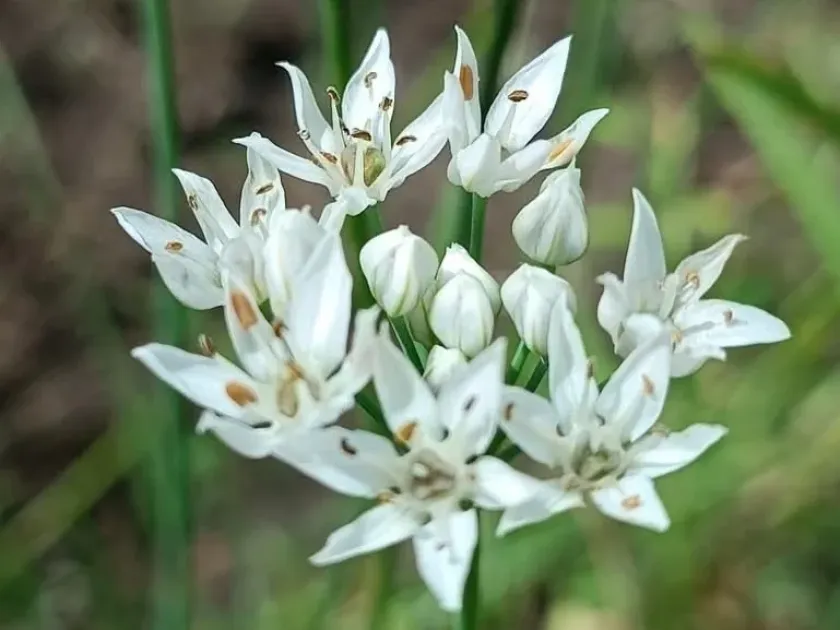
Fragrant garlic (Allium ramosum L.) belongs to the Amaryllidaceae family. It is a perennial herbaceous plant valued for its garlic-flavored, flat, succulent leaves.
Seeds are typically sown in early spring as soon as the soil is workable, or in late autumn for winter-hardy germination during the following spring.
A row spacing of 30–40 cm is ideal for cultivation, allowing enough space for manual weeding and maintenance while maximizing yield per square meter.
The planting depth should be approximately 1–1.5 cm. Soil moisture is critical during the germination stage to ensure a uniform emergence of seedlings.
Fragrant garlic is slow to establish during its first growing season, so keeping the seedbed free of competition from weeds is essential for success.
Growing requirements
This crop thrives in open, sunny locations. While it is adaptable to various conditions, full sunlight promotes better leaf development and aromatic intensity.
The plant prefers well-drained, fertile, loamy soils with a neutral pH. It is highly tolerant of various soil types but dislikes waterlogged conditions.
Allium ramosum is exceptionally winter-hardy, allowing it to persist in regions with severe winters without the need for additional ground protection.
Regular irrigation is necessary throughout the growing season to encourage constant leaf production, especially after each harvesting cycle.
Routine maintenance includes soil aeration through shallow cultivation and supplemental fertilization to support the rapid regrowth of harvested foliage.
Yield
The yield of fragrant garlic typically peaks in the second and third years of establishment as the root system matures and develops more lateral shoots.
Multiple harvests can be conducted per season, usually 3 to 5 cuts, depending on the climatic zone and the intensity of soil management applied.
Under optimal conditions, growers can expect 2 to 4 kilograms of high-quality fresh greens per square meter of cultivated land throughout the year.
The plant demonstrates vigorous regrowth capabilities. However, over time, the clumps can become overcrowded, necessitating division every 4–5 years.
Dividing the clumps helps maintain the health and vigor of the plants, preventing a decline in leaf size and overall harvest quality in long-term stands.
Main diseases and pests
Downy mildew is the most significant disease affecting the foliage, particularly in humid or overcrowded conditions where airflow is restricted.
Onion flies and certain beetles can cause damage to the base of the plant, potentially leading to leaf yellowing and stunted growth of the foliage.
Good crop rotation practices are essential to prevent the buildup of soil-borne pathogens that commonly affect species within the Allium genus.
Monitoring for signs of infestation is crucial, especially in the spring months when pests are most active in emerging young green leaves.
Integrated pest management strategies, including the removal of infected plant debris, help mitigate the spread of diseases within the planting field.
Harvesting
Harvesting should begin when leaves are approximately 25–30 cm tall, ensuring that the basal part of the plant remains intact to allow regrowth.
The leaves are cut 3–5 cm above the soil surface using clean, sharp tools to avoid damaging the growing point located at the base of the crown.
Post-harvest handling is critical because the leaves are delicate. Quick cooling or immediate use is required to maintain their fresh, aromatic profile.
Fragrant garlic is widely used in oriental cuisine, appreciated for its mild garlic flavor that complements various salads, stir-fries, and sauces.
The crop can also be preserved through freezing or drying, although fresh consumption is highly preferred to retain the delicate essential oils.