
Field garlic
Allium oleraceum L.
Description
Sowing dates
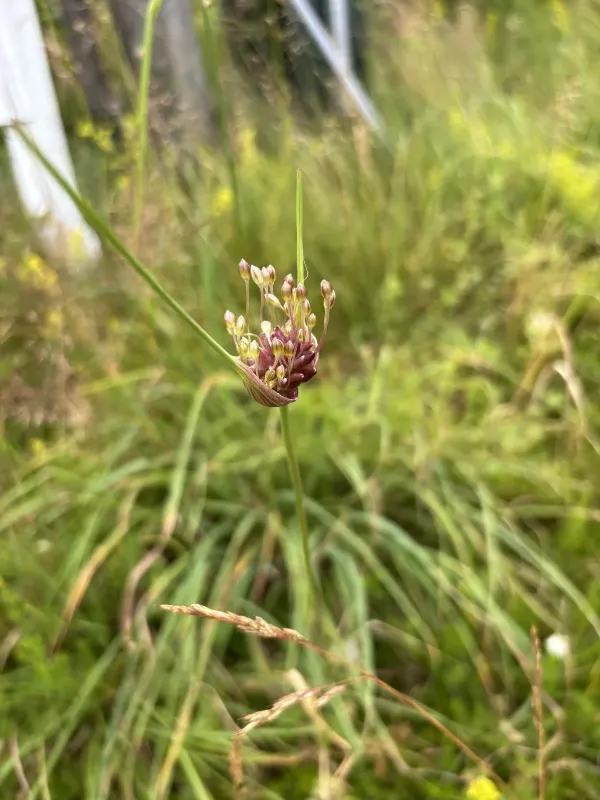
Field garlic (Allium oleraceum L.) is a perennial herbaceous plant belonging to the Amaryllidaceae family, widely distributed in Europe and parts of Western Asia as a wild-growing species with edible potential.
In agricultural practice, seeding is best performed in early spring as soon as the soil is workable, ensuring that the seeds are covered with a thin layer of fine, fertile substrate.
Direct sowing in rows with an interval of 20-30 centimeters allows for sufficient airflow, which is critical for reducing the humidity levels around the foliage of the developing plants.
Vegetative propagation is widely practiced for this species by planting small offsets or bulbils that emerge from the inflorescence, which ensures more uniform and rapid establishment compared to seeds.
The crop can be successfully propagated in the autumn as well, provided that the soil temperature is low enough to prevent premature germination before the onset of winter frost.
Growing requirements
Field garlic thrives in sunny, open locations and prefers well-drained, nutrient-rich, neutral-pH soils that are not susceptible to waterlogging or compaction.
The plant is highly adaptable to various climatic conditions, exhibiting excellent frost hardiness and the ability to withstand temporary droughts once the root system is well-developed.
Maintenance involves routine weeding and light mechanical cultivation to break the soil crust, especially after heavy rain, to facilitate better gas exchange for the bulbs.
Fertilization with balanced NPK complexes during the initial stages of growth significantly enhances foliage production, while reduced nitrogen applications are recommended as the bulbs mature.
Adequate crop spacing is vital to prevent the spread of soil-borne pathogens and to ensure that each plant receives sufficient sunlight throughout the growing season.
Main diseases and pests
Like many species in the genus Allium, this crop is susceptible to the onion maggot (Delia antiqua), which can cause significant damage to the root system and bulb tissue.
Fungal diseases, including downy mildew (Peronospora destructor) and various types of basal rot, pose a threat if the planting density is too high or if drainage is inadequate.
Integrated pest management strategies should include the use of crop rotation, where alliums are not replanted in the same location for a minimum of three years to break the pathogen life cycle.
Monitoring for thrips is essential during dry, hot weather, as these pests can cause yellowing and curling of the leaves, thereby reducing the photosynthetic area of the plant.
- Onion smut and other soil-borne infections.
- Root-knot nematodes affecting plant vigor.
- Leaf blight caused by excessive humidity.
Harvesting
Harvesting for fresh greens is performed throughout the growing season by selectively trimming the outer leaves, which encourages the plant to continue producing new foliage.
If harvesting for bulbs, the process should take place once the foliage turns yellow and falls over, usually in the late summer, indicating that the bulb has reached maturity.
After excavation, the bulbs require a thorough curing period in a dry, shaded, and well-ventilated area to allow the protective outer layers to harden and prevent fungal infection during storage.
Once cured, the bulbs should be cleaned of loose soil and stored in a cool, dry environment with good ventilation to maintain their quality for several months.
Culinary uses for field garlic include its application as a piquant herb in salads, soups, and traditional sauces, as well as an ingredient in various preservation methods.