
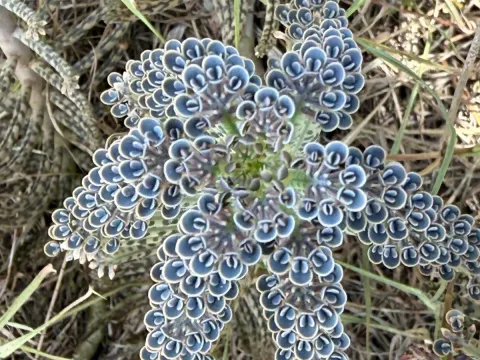
Kalanchoe
Kalanchoe
Kalanchoe is a genus of succulent plants within the Crassulaceae family, native to tropical Africa, Madagascar, and parts of Asia. These plants are well-adapted to arid environments, possessing specialized water-storage tissues in their leaves and stems.
What the section contains
 Felt bush
Kalanchoe beharensis
Felt bush
Kalanchoe beharensis
 Houghton's Kalanchoe
Kalanchoe houghtonii
Houghton's Kalanchoe
Kalanchoe houghtonii
 Kalanchoe arborescens
Kalanchoe arborescens
Kalanchoe arborescens
 Kalanchoe aromatica
Kalanchoe aromatica
Kalanchoe aromatica
 Kalanchoe bentii
Kalanchoe bentii
Kalanchoe bentii
 Kalanchoe campanulata
Kalanchoe campanulata
Kalanchoe campanulata
 Kalanchoe crundallii
Kalanchoe crundallii
Kalanchoe crundallii
 Kalanchoe daigremontiana
Kalanchoe daigremontiana
Kalanchoe daigremontiana
 Kalanchoe delagoensis
Kalanchoe delagoensis
Kalanchoe delagoensis
 Kalanchoe dinklagei
Kalanchoe dinklagei
Kalanchoe dinklagei
 Kalanchoe eriophylla
Kalanchoe eriophylla
Kalanchoe eriophylla
 Kalanchoe farinacea
Kalanchoe farinacea
Kalanchoe farinacea
 Kalanchoe fedtschenkoi
Kalanchoe fedtschenkoi
Kalanchoe fedtschenkoi
 Kalanchoe glaucescens
Kalanchoe glaucescens
Kalanchoe glaucescens
 Kalanchoe gracilipes
Kalanchoe gracilipes
Kalanchoe gracilipes
 Kalanchoe grandiflora
Kalanchoe grandiflora
Kalanchoe grandiflora
 Kalanchoe hildebrandtii
Kalanchoe hildebrandtii
Kalanchoe hildebrandtii
 Kalanchoe hybrids
Kalanchoe hybrids
Kalanchoe hybrids
 Kalanchoe integra
Kalanchoe integra
Kalanchoe integra
 Kalanchoe Kewensis
Kalanchoe kewensis
Kalanchoe Kewensis
Kalanchoe kewensis
 Kalanchoe lanceolata
Kalanchoe lanceolata
Kalanchoe lanceolata
 Kalanchoe lateritia
Kalanchoe lateritia
Kalanchoe lateritia
 Kalanchoe laxiflora
Kalanchoe laxiflora
Kalanchoe laxiflora
 Kalanchoe longiflora
Kalanchoe longiflora
Kalanchoe longiflora
 Kalanchoe luciae
Kalanchoe luciae
Kalanchoe luciae
 Kalanchoe millotii
Kalanchoe millotii
Kalanchoe millotii
 Kalanchoe orgyalis
Kalanchoe peteri
Kalanchoe peteri
Kalanchoe orgyalis
Kalanchoe orgyalis
Kalanchoe peteri
Kalanchoe peteri
 Kalanchoe pinnata
Kalanchoe pinnata
Kalanchoe pinnata
 Kalanchoe prolifera
Kalanchoe prolifera
Kalanchoe prolifera
 Kalanchoe pumila
Kalanchoe rolandi-bonapartei
Kalanchoe rolandi-bonapartei
Kalanchoe pumila
Kalanchoe pumila
Kalanchoe rolandi-bonapartei
Kalanchoe rolandi-bonapartei
 Kalanchoe rosei
Kalanchoe rosei
Kalanchoe rosei
 Kalanchoe rotundifolia
Kalanchoe rotundifolia
Kalanchoe rotundifolia
 Kalanchoe scandens
Kalanchoe scandens
Kalanchoe scandens
 Kalanchoe sexangularis
Kalanchoe sexangularis
Kalanchoe sexangularis
 Kalanchoe synsepala
Kalanchoe welwitschii
Kalanchoe welwitschii
Kalanchoe synsepala
Kalanchoe synsepala
Kalanchoe welwitschii
Kalanchoe welwitschii
 Panda plant
Kalanchoe tomentosa
Panda plant
Kalanchoe tomentosa
Kalanchoe
Cultivation requires abundant bright light. While Kalanchoe is a heat-loving crop, it thrives best in a temperature range of 18°C to 28°C during the growing season. Excessive shade significantly weakens the plant's structural integrity.
Soil requirements are strict regarding drainage. A standard mix should consist of equal parts of potting soil and perlite or coarse sand. The pH level should remain slightly acidic to neutral to ensure nutrient availability for the plant.
Watering practices are critical for the longevity of the crop. The plant follows a CAM photosynthesis cycle, which allows it to tolerate periods of drought. It is essential to let the top layer of soil dry out completely between waterings.
Agronomic maintenance includes regular pruning to encourage bushy growth and deadheading flowers to promote a second bloom. Proper spacing is required to ensure adequate airflow between plants, especially in commercial production settings.
The most significant pathological threat to Kalanchoe is fungal root rot caused by Pythium and Phytophthora. These pathogens thrive in waterlogged soil conditions, leading to sudden wilting and tissue necrosis.
Powdery mildew is a common foliar disease triggered by high humidity and poor air circulation. It appears as a dusty white mycelial growth on leaf surfaces, reducing the photosynthetic efficiency of the plant.
Mealybugs are the most persistent insect pests. They hide in the leaf axils and create waxy protective layers, making chemical control difficult. Growers often use systemic pesticides to manage these infestations effectively.
Aphids pose a threat to young shoots and flower buds, causing deformation and transmitting viral diseases. Integrated Pest Management (IPM) strategies, including biological control or targeted sprays, are recommended for commercial crops.
To minimize disease pressure, sanitation in the growing area is paramount. All equipment must be disinfected regularly, and infected plant material should be removed and destroyed immediately to prevent the spread of spores.