
Felt bush
Kalanchoe beharensis
Description
Growing requirements
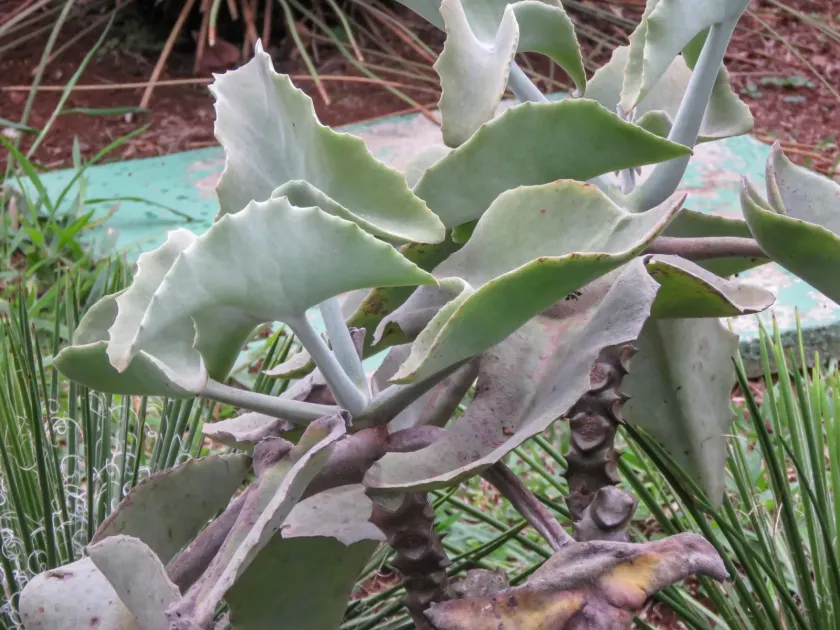
Kalanchoe beharensis, commonly known as the felt bush or velvet elephant ear, is a large succulent shrub belonging to the Crassulaceae family. Native to Madagascar, this plant is recognized for its unique, triangular-shaped leaves covered in fine, rusty-brown hairs.
The cultural requirements for this plant emphasize full sun exposure. While it can tolerate partial shade, bright light is essential to maintain the dense foliage and the characteristic velvety texture of the leaves, preventing the plant from becoming spindly.
Soil composition must prioritize drainage. A standard cactus or succulent potting mix, amended with extra pumice or coarse grit, is recommended to ensure that water does not sit around the root zone for extended periods, which could be fatal to the plant.
Temperature management requires avoiding frost at all costs. While it can handle heat well, it thrives in environments ranging from 18°C to 25°C. During the dormant winter season, a drop in temperature to about 12°C helps in the plant's metabolic regulation.
Watering should be approached with caution, following the soak-and-dry method. During the active growing season, allow the soil to become completely dry before applying water again. During the winter, watering frequency should be reduced significantly to simulate the dry season.
Main diseases and pests
Common pests affecting the felt bush include mealybugs and spider mites, which often find shelter within the thick, hairy foliage. Integrated pest management, including regular inspection and the use of insecticidal soaps, is highly effective for control.
Root rot remains the most significant threat to the overall vigor of Kalanchoe beharensis. It is primarily caused by poor drainage or overwatering in low-light conditions, leading to stem collapse and fungal infection of the root system.