
Kalanchoe laxiflora
Kalanchoe laxiflora
Description
Growing requirements
Kalanchoe laxiflora is a distinct succulent species belonging to the Crassulaceae family. Native to the rocky terrains of Madagascar, this plant has evolved to thrive in environments with intermittent rainfall and high drainage capacity.
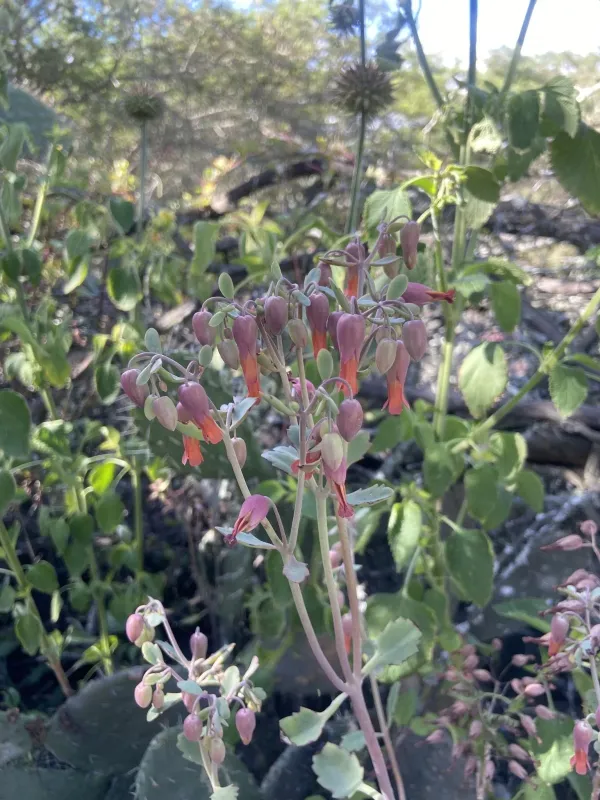
The plant features upright, woody stems with fleshy, oval-shaped leaves that possess serrated edges. Its primary aesthetic value comes from its pendulous, bell-shaped flowers that appear in clusters, creating a unique visual appeal.
Agricultural success with this species depends on providing abundant bright light. While the plant can tolerate some direct sun, it performs best in bright, filtered light to maintain its vibrant leaf coloration and compact growth habit.
The species is highly sensitive to soil moisture. It requires a well-draining substrate composed of pumice, perlite, and potting soil. This structure ensures that oxygen reaches the roots and prevents saturation, which is fatal to the plant.
Optimal growth occurs at temperatures ranging between 18°C and 25°C. During the dormant winter phase, temperatures should be lowered to approximately 12°C to facilitate the cooling period required for robust flowering in the spring.
Main diseases and pests
Root rot is the most common ailment associated with Kalanchoe laxiflora. This condition is triggered by excessive irrigation, poor drainage, or cold and damp environmental conditions that prevent the soil from drying out.
Mealybugs are the primary pest concern for this succulent. These insects typically hide in the leaf axils or along the stems, feeding on the plant's sap and creating white, cottony webs that serve as indicators of an infestation.
Management of pest populations involves physical removal or the application of horticultural oils and systemic insecticides. Early detection is crucial, as mealybugs can spread rapidly if left unchecked.
Fungal leaf spot may occur in conditions with poor air circulation and high humidity. It is characterized by small, discolored lesions on the leaves, which can lead to premature leaf drop if not treated with appropriate fungicides.
To ensure long-term health, growers must prioritize environmental hygiene. Removing fallen dead leaves from the soil surface and maintaining adequate spacing between plants reduces the likelihood of both fungal outbreaks and pest colonization.