
Kalanchoe scandens
Kalanchoe scandens
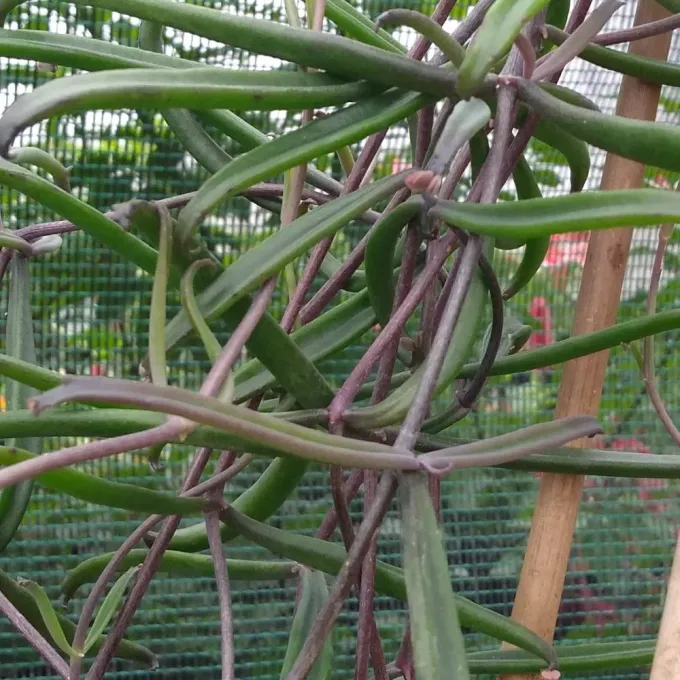
Description
Growing requirements
Kalanchoe scandens belongs to the Crassulaceae family and is a climbing or semi-trailing succulent. It originates from Madagascar, where it naturally inhabits rocky slopes and areas with sparse forest cover.
For successful cultivation, the crop requires well-drained, sandy or rocky substrates. An optimal pH level between 6.0 and 7.0 ensures proper nutrient availability for the plant's growth.
The plant is light-loving, necessitating intense lighting during cultivation. However, during peak daylight hours, shading is recommended to prevent leaf scorching from direct sunlight.
The temperature should be maintained between 18–25°C throughout the growing season. Avoiding sudden temperature fluctuations and cold drafts is essential to maintain the integrity of the stems.
Watering must be moderate, occurring only after the soil ball has dried out completely. Excess moisture causes root rot, which is the primary threat to the health of this specific variety.
Main diseases and pests
The most common pests include mealybugs and spider mites. These insects thrive in dry and warm conditions, extracting essential sap from the plant's delicate young shoots.
Fungal infections, such as late blight and grey mold, affect the plant when humidity levels are improperly managed or water stagnation occurs. Prevention relies on strictly following standard irrigation protocols.