
Kalanchoe pumila
Kalanchoe pumila
Description
Growing requirements
Kalanchoe pumila is a low-growing perennial succulent belonging to the Crassulaceae family. It is native to the island of Madagascar, where it grows in rocky outcrops and dry, well-draining soil conditions.
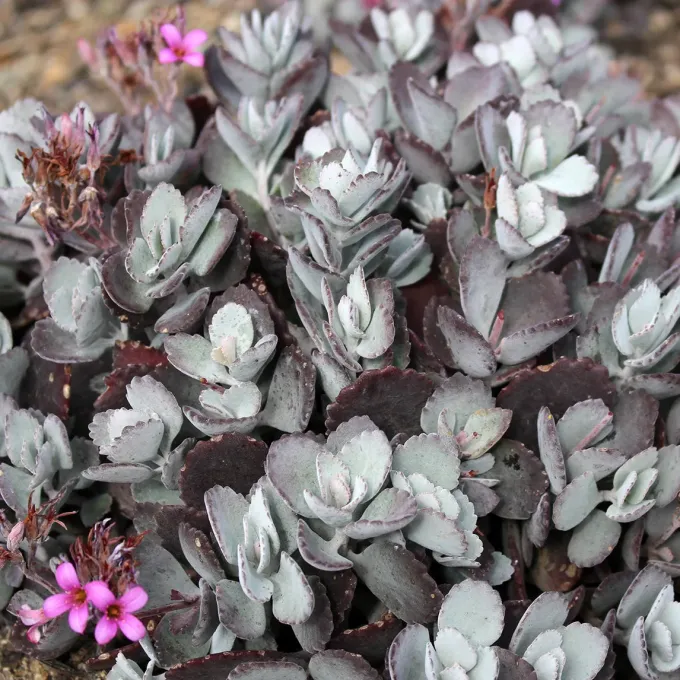
Botanically, this species is known for its greyish, glaucous foliage covered in fine hairs and a powdery substance. This adaptation helps the plant survive in high-light environments by reflecting solar radiation and reducing water loss through transpiration.
For successful cultivation, the plant requires a porous, fast-draining potting medium. Standard succulent or cactus mixes are recommended, ensuring that the roots are never left in standing water, which is fatal for the plant.
The cultural requirements include plenty of bright, indirect sunlight to maintain its compact form and promote blooming. If the light intensity is too low, the plant will stretch and lose its natural, dense aesthetic appeal.
Temperature management is crucial, with the plant thriving in warm conditions of 18–25°C. A winter rest period, characterized by cooler temperatures and reduced moisture, is essential for stimulating flower bud formation in the spring.
Main diseases and pests
The most significant threat to Kalanchoe pumila is root rot, typically caused by overwatering or poor drainage. Once established, root rot often spreads to the stem, resulting in irreversible tissue decay.
Mealybugs are the primary pests that affect this succulent. These insects tend to hide in the tight spaces between leaves and stems, where they suck sap and secrete honeydew, which can eventually lead to sooty mold growth.
Spider mites may also pose a risk during periods of low humidity. These microscopic pests feed on the leaves, causing small yellow spots and fine webbing on the plant's surface, which severely affects its photosynthetic efficiency.
Fungal infections, such as powdery mildew, can occur if the humidity is too high and air circulation is poor. Keeping the foliage dry during watering is a key preventative measure to avoid leaf spotting and fungal growth.
Integrated pest management, including regular inspection and the use of insecticidal soaps or systemic treatments, is recommended. Always ensure proper spacing between plants to maximize airflow and minimize the risk of spreading infestations.