
Large-flowered houseleek
Sempervivum grandiflorum
Description
Growing requirements
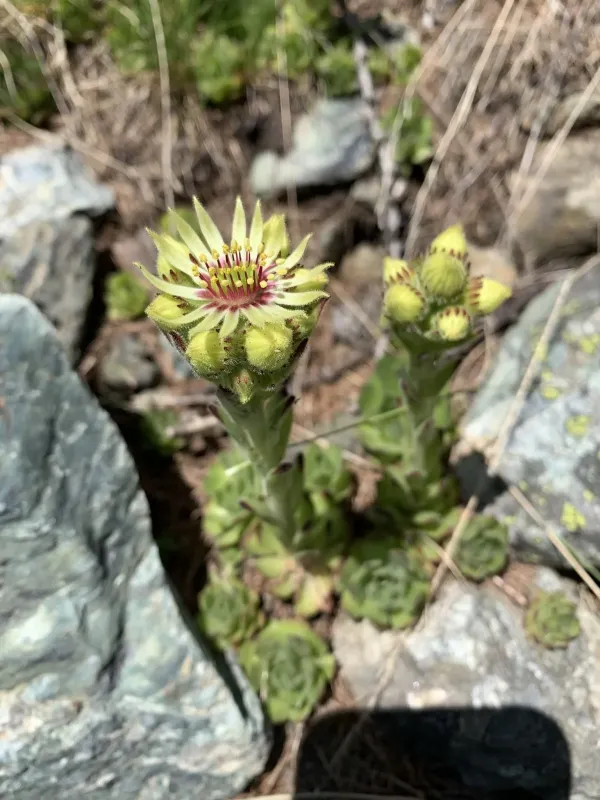
The large-flowered houseleek (Sempervivum grandiflorum) is a perennial succulent belonging to the Crassulaceae family. It is native to the alpine and subalpine regions of the European mountains.
This plant is characterized by compact, fleshy leaf rosettes that store moisture, allowing it to survive in harsh, arid environments. During the blooming season, it produces distinct, large yellow flowers.
For optimal growth, this crop requires full sun exposure and poor, gritty, or sandy soil with excellent drainage. It is highly adapted to nutrient-poor soils and is essentially maintenance-free once established.
Climate adaptability is one of its primary strengths, as the plant can withstand freezing temperatures and intense heat. However, it requires a dry environment, as humidity and prolonged soil moisture are detrimental to its health.
In terms of agricultural and horticultural use, it is primarily used in xeriscaping, rock gardens, and green roofing systems. Its unique texture and durability make it a preferred choice for ornamental landscape architecture.
Main diseases and pests
The main threats to the large-flowered houseleek are fungal infections such as root rot and crown rot. These usually occur when the plant is kept in waterlogged conditions or lacks adequate ventilation.
Insect pests include root aphids that can settle in the root system and cause stunted growth. Occasionally, gastropods such as slugs and snails may feed on the fleshy leaves, especially in damp conditions.
Prophylaxis involves maintaining a strict watering regimen and ensuring the soil is gravel-amended to prevent water retention. Avoiding heavy nitrogen fertilizers is crucial, as they promote soft growth that is prone to rot.
If fungal issues arise, it is essential to remove infected rosettes promptly and treat the soil with systemic fungicides. Proper spacing between plants helps maintain airflow, which is critical for disease prevention.
Monitoring for pests is recommended during periods of high humidity. If infestation occurs, targeted insecticidal treatments are effective, but care should be taken to avoid accumulation of chemicals within the leaf rosette.