
Kalanchoe delagoensis
Kalanchoe delagoensis
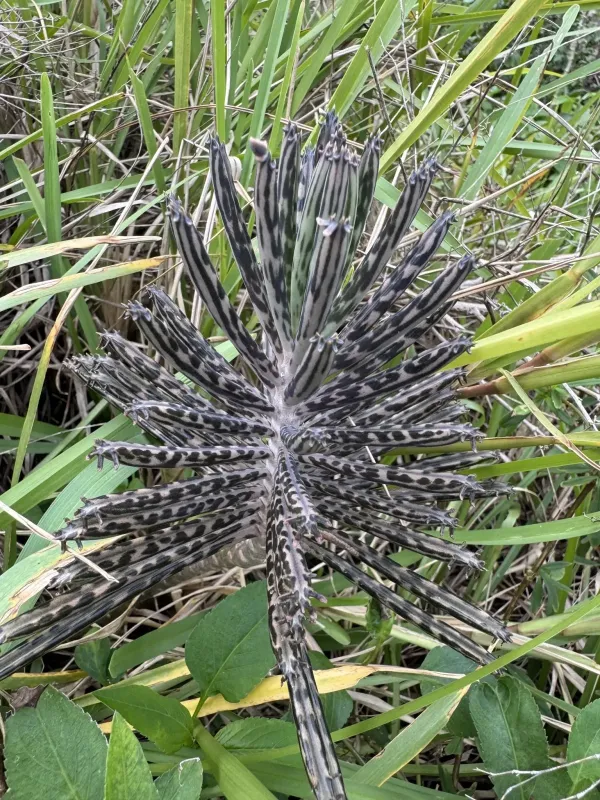
Description
Growing requirements
Kalanchoe delagoensis, commonly known as the chandelier plant, is a perennial succulent belonging to the Crassulaceae family. Native to Madagascar, it is highly adapted to arid environments and characterized by its unique tubular leaves and rapid growth potential.
The crop requires full sun exposure to maintain its structural integrity and distinct coloration. In a controlled agricultural or horticultural setting, the substrate must be highly porous and fast-draining, typically consisting of succulent potting mixes enriched with grit or perlite to facilitate root aeration.
Watering requirements are strictly moderate; the plant is extremely drought-tolerant and prone to root rot if moisture levels remain high for extended periods. During the active growing season, deep but infrequent watering is recommended to allow the medium to dry out completely.
This species is famous for its prolific reproduction through plantlets that develop along the leaf margins. These clonal propagules detach easily and sprout readily upon contact with soil, which allows the plant to form dense colonies rapidly in suitable climatic conditions.
Industrially or ornamentally, it serves as a resilient choice for xeriscaping, though its toxic compounds must be carefully managed. Due to its ease of propagation, it is sometimes treated as an invasive species in regions with mild climates where it can outcompete native vegetation.
Main diseases and pests
Primary insect pests include mealybugs and spider mites, which thrive in dry indoor environments or greenhouses. Regular monitoring and the application of horticultural oils or targeted systemic pesticides are standard practices for maintaining healthy plant populations.
Fungal pathogens represent a significant risk, primarily driven by poor drainage and excessive humidity. Preventing water accumulation around the stem base and ensuring adequate airflow are the most critical prophylactic measures to protect the plant from root and crown rot.