
Kalanchoe crundallii
Kalanchoe crundallii
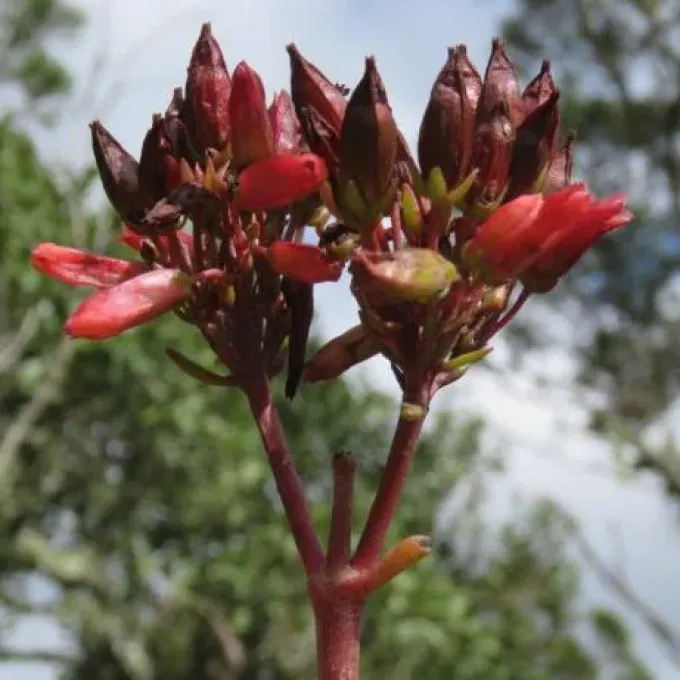
Description
Growing requirements
Kalanchoe crundallii is a succulent perennial belonging to the Crassulaceae family. It is indigenous to the arid regions of South Africa, where it has evolved to thrive in environments characterized by limited rainfall and intense exposure to sunlight.
The plant is anatomically specialized, featuring thick, fleshy leaves that store water efficiently. This evolutionary adaptation allows the species to maintain physiological processes during prolonged dry spells, which is a signature characteristic of this genus.
Cultivation requires specific soil conditions, prioritizing high drainage properties. A mixture of gravel, perlite, and a small portion of loam is recommended to ensure that the roots do not remain saturated, as this is the primary cause of mortality in succulent cultivation.
Climate requirements include a stable temperature range, ideally between 18 and 25 degrees Celsius. The plant is not frost-tolerant, meaning it must be protected from temperatures dropping near freezing point to avoid cellular damage to the leaves.
Sunlight exposure is crucial for the morphological development of Kalanchoe crundallii. While it tolerates bright light, extreme midday heat in some regions might require light shading to prevent leaf scorching, ensuring a balanced growth rate throughout the season.
Main diseases and pests
Pathogenic threats are dominated by fungal infections, primarily root rot and stem rot caused by excessive humidity. Poor air circulation exacerbates these conditions, making ventilation a key component of the overall agricultural strategy.
Pest pressures often come from mealybugs and spider mites. These pests thrive in stagnant air and moderate temperatures, necessitating a strategy of early detection, physical removal, and the application of suitable chemical controls if the infestation is severe.
Leaves may show symptoms of distress such as yellowing or wilting, which should be assessed to determine if the cause is improper watering or a pest infestation. Correct identification of the symptom is essential for effective treatment and recovery.
Insects like aphids can also occasionally impact younger, more tender growth. Managing these pests is vital during the active growing season when the plant produces new tissue, which is particularly susceptible to damage.
- Proper soil drainage management.
- Monitoring for honeydew or white cottony masses.
- Application of fungicides only when signs of rot appear.
- Cleaning affected areas with horticultural soaps.
- Providing adequate sunlight to boost plant immunity.