
Kalanchoe glaucescens
Kalanchoe glaucescens
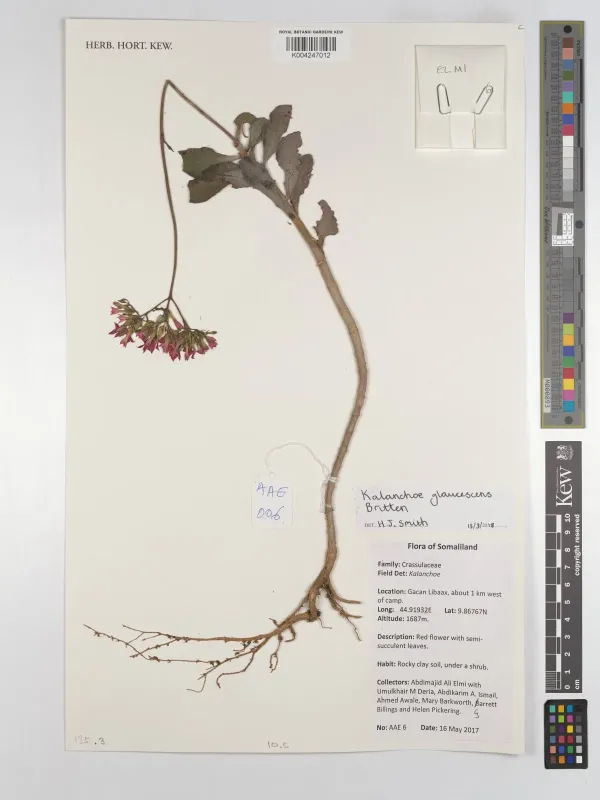
Description
Growing requirements
Kalanchoe glaucescens belongs to the Crassulaceae family. This perennial succulent herbaceous plant is native to the tropical regions of Africa, including Ethiopia and surrounding territories, where it thrives in diverse environments.
The culture has a pronounced ability to adapt to arid conditions, growing on stony soils and rocky outcrops. A characteristic feature of the species is the presence of a glaucous waxy coating on the leaves, which protects the plant from excessive moisture loss under direct sunlight.
Successful cultivation requires well-drained, loose substrates with a neutral to slightly acidic pH. Water stagnation in the root system is a critical factor leading to rapid plant death, so agricultural practices must strictly avoid overwatering.
Climatic requirements include a stable temperature range between 18 and 25 degrees Celsius. The culture is extremely sensitive to freezing temperatures and requires protection from frost, which limits its outdoor cultivation to tropical and subtropical regions.
The plant demonstrates a high requirement for intense but diffused solar lighting. When light is insufficient, the stems become elongated, losing their compact shape and specific glaucous leaf tint, which significantly reduces the plant's decorative and biological quality.
Main diseases and pests
The primary threats to Kalanchoe glaucescens are associated with improper irrigation and humidity control. The most frequent problem is the development of root and stem base rot, caused by pathogenic fungi resulting from excessively damp substrate.
Under greenhouse or indoor conditions, the crop can be affected by pests typical for succulents. These include mealybugs, which accumulate in leaf axils, and spider mites, which proliferate during periods of low indoor humidity.
Aphid infestations are also possible during periods of active shoot growth. To combat these insects, the use of systemic insecticides or mechanical cleaning with alcohol-based solutions is recommended for minor infestations.
Disease prevention consists of strictly following the soil-drying cycle between waterings. It is also crucial to ensure adequate air ventilation in growing areas to prevent moisture stagnation on leaf surfaces.
Regular inspection of the underside of leaves and growth points is essential for maintaining the health of the culture. Early detection of pests allows for effective containment of outbreaks and helps preserve the plant's commercial quality.