
Kalanchoe pinnata
Kalanchoe pinnata
Description
Growing requirements
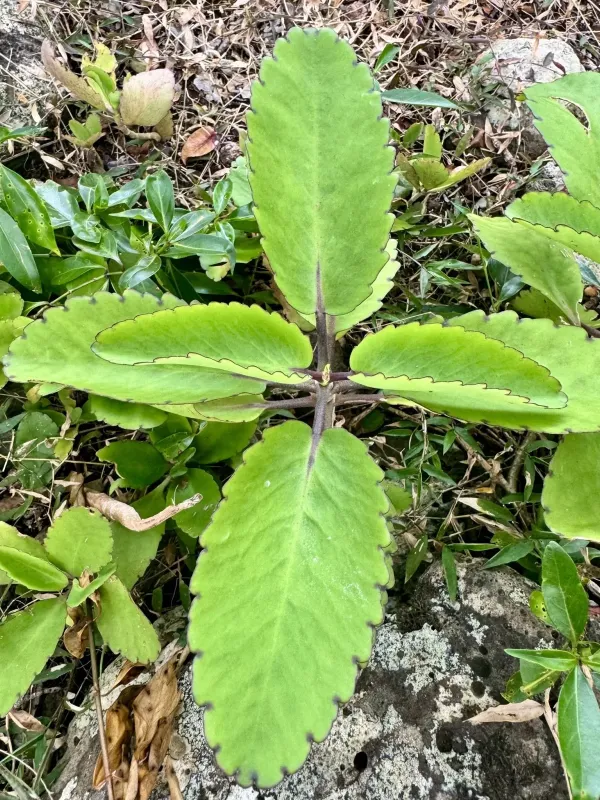
Kalanchoe pinnata is a prominent succulent plant belonging to the Crassulaceae family. Native to the tropical regions of Madagascar, it has been introduced to various warm climates across the globe, where it is valued both as an ornamental plant and for its significant medicinal properties.
The plant features distinct pinnate leaves and a unique vegetative reproduction mechanism, producing small plantlets along the leaf margins. These plantlets readily take root when they fall onto the soil, making it a highly successful colonizing species in tropical environments.
For optimal growth, Kalanchoe pinnata requires bright, filtered sunlight. While it can tolerate direct sunlight, excessive heat may stress the plant. Consistent temperatures ranging from 20°C to 28°C are considered ideal for maintaining steady vegetative development.
Soil composition is critical for this species. It demands a well-draining substrate, such as a mixture of loamy soil and coarse sand. Waterlogging must be strictly avoided, as the plant is highly susceptible to root rot if left in saturated soil conditions for extended periods.
The agricultural management of this crop involves minimal fertilization. Over-fertilizing can lead to excessive, weak growth that is less desirable for pharmacological processing. A balanced, dilute liquid fertilizer applied during the growing season is generally sufficient for maintaining vigor.
Main diseases and pests
Pest management is a fundamental aspect of cultivating Kalanchoe pinnata. Common pests include aphids and mealybugs, which tend to congregate in the protected areas of the plant, such as leaf axils and the undersides of leaves.
Fungal pathogens represent the most significant threat to the crop, particularly in environments with high humidity. Conditions such as Phytophthora root rot can decimate populations if irrigation strategies are not meticulously managed.
To prevent disease outbreaks, ensuring proper air circulation is paramount. Increased spacing between individual plants and the use of sterile growing media significantly reduce the risk of soil-borne infections.
Regular inspection is essential for early detection of infestations. Mechanical removal of pests using a soft cloth or targeted application of organic insecticidal soaps can be effective if the issue is caught during its early stages.
For large-scale cultivation, implementing an integrated pest management (IPM) approach is recommended. This minimizes the reliance on chemical treatments, preserving the purity and biological potency of the succulent leaves for later harvest.