
Houghton's Kalanchoe
Kalanchoe houghtonii
Description
Growing requirements
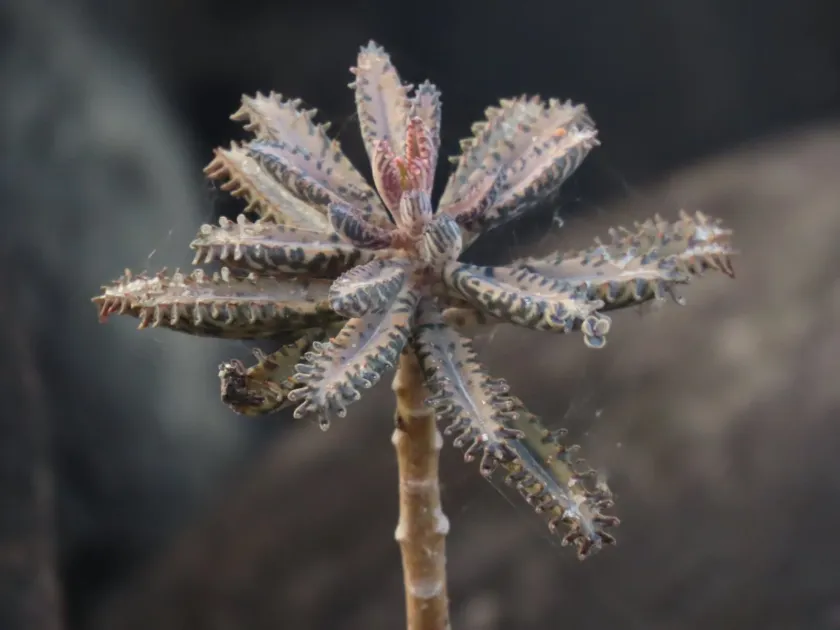
Houghton's Kalanchoe (Kalanchoe houghtonii) is a member of the Crassulaceae family. It is a striking hybrid succulent known for its unique foliage and ease of propagation.
Originating from Madagascar, this species is well-adapted to arid environments. It thrives in regions with intense light and moderate temperature fluctuations.
The plant demands high light intensity. Without sufficient exposure, the characteristic succulent structure loses its compactness, becoming etiolated and fragile.
A well-draining soil mix is critical for this species. Using a substrate designed for cacti or succulents, amended with coarse sand or pumice, is highly recommended.
Watering requirements follow the soak-and-dry method. During the growing season, allow the soil to dry out completely between waterings to prevent root system collapse.
Main diseases and pests
The primary concern for Houghton's Kalanchoe is overwatering, which leads to root and stem rot. These fungal infections often prove fatal to the plant if not addressed early.
Mealybugs are the most common pests found on this plant. They hide in the leaf axils, sucking sap and stunting growth; they require systematic inspection and localized treatment.
Spider mites may manifest in low-humidity environments. These pests create fine webbing and cause the foliage to yellow, necessitating a raise in humidity or horticultural oil treatment.
Aphids can occasionally cluster on new, tender growth at the top of the plant. Manual removal or soft contact insecticides are usually effective for control.
Proper air circulation is the best preventive measure against various pathogens. Avoid crowding plants to ensure the foliage dries quickly after watering.