
Kalanchoe farinacea
Kalanchoe farinacea
Description
Growing requirements
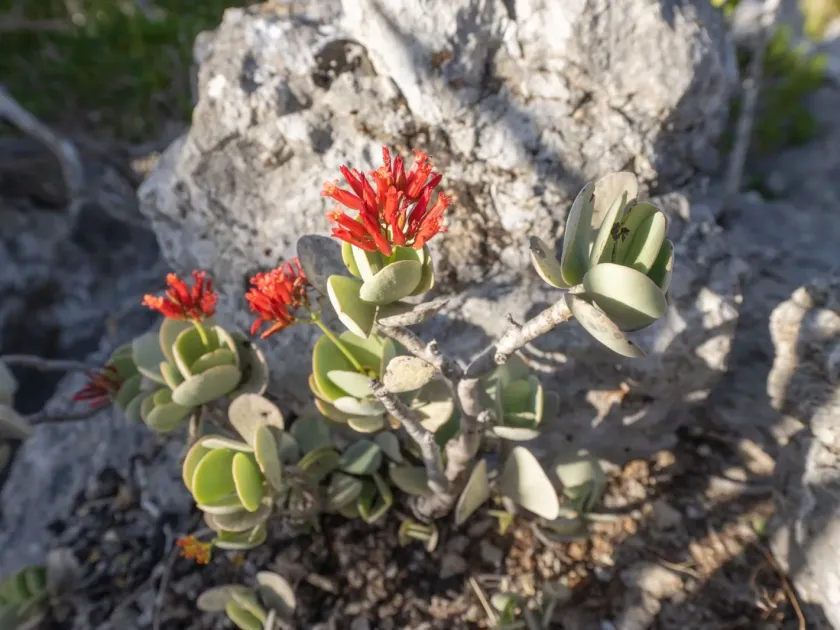
Kalanchoe farinacea is a distinctive member of the Crassulaceae family, highly regarded for its attractive, powdery-coated succulent leaves. It grows in a compact, rosette-forming habit that makes it an excellent candidate for ornamental succulent collections.
Native to the island of Socotra, this plant is evolutionary adapted to survive in harsh, arid conditions. Its natural habitat is characterized by rocky substrates and high exposure to sunlight, which has shaped its drought-resistant metabolism.
Regarding light requirements, Kalanchoe farinacea needs plenty of bright, indirect light to maintain its compact shape. In lower light environments, the plant will inevitably stretch and lose its characteristic aesthetic, becoming weak and prone to collapse.
The soil substrate must be highly porous to ensure rapid drainage. Commercial cactus and succulent mixes, further amended with inorganic materials like pumice or coarse grit, provide the ideal environment for the roots to remain healthy and oxygenated.
Temperature management is crucial throughout the year. While the plant appreciates warmth during the growing season, a cool winter period with temperatures around 12 to 15 degrees Celsius is essential to trigger its natural physiological rhythms.
Main diseases and pests
Overwatering is the primary threat to the longevity of Kalanchoe farinacea. Excessive moisture in the root zone quickly promotes the growth of pathogens, causing root rot that often proves fatal if not identified and addressed immediately.
Mealybugs are the most common pest associated with this species. These insects hide in the tight crevices between leaves and at the base of the stem, protected by their waxy secretions, which makes them difficult to target without systemic treatment.
Poor air circulation increases the risk of fungal infections. When moisture remains trapped on the surface of the leaves, it encourages the development of spots and molds, particularly during the dormant season when evaporation rates are lower.
Spider mites can become a problem in environments with low humidity and high temperatures. They thrive by feeding on the sap of the plant, leading to stunted growth and the characteristic loss of leaf color across the infected areas.
Preventative maintenance includes keeping the foliage dry during watering and ensuring that the plant is not crowded by other specimens. Maintaining good hygiene by cleaning pots and tools helps significantly in managing potential outbreaks.