
Kalanchoe eriophylla
Kalanchoe eriophylla
Description
Growing requirements
Kalanchoe eriophylla, commonly known as woolly kalanchoe, is a dwarf succulent species belonging to the Crassulaceae family. Native to the rocky terrains of Madagascar, it is highly adapted to arid environments and intense solar radiation.
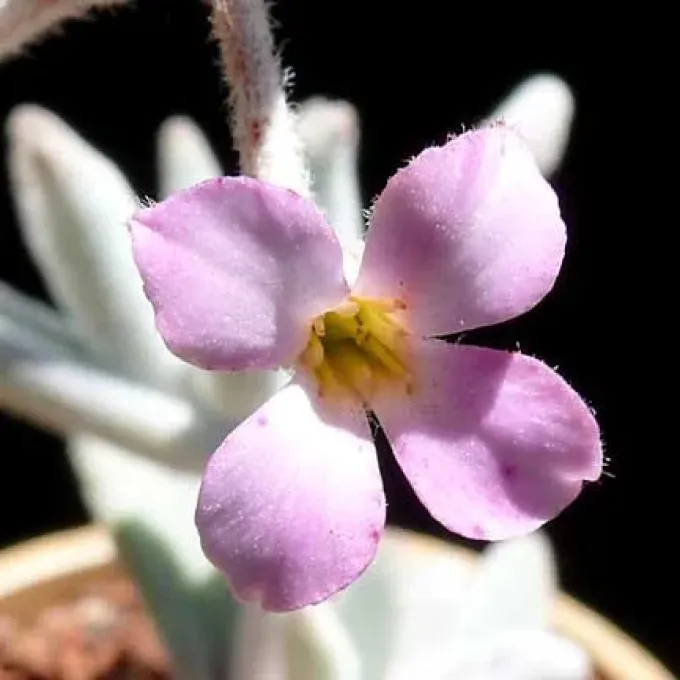
The plant is distinguished by its thick, silvery-white hairs that cover its leaves and stems. This physical trait serves as a crucial adaptation, allowing the plant to reflect harmful UV rays and minimize transpirational water loss in its natural habitat.
Cultivation requires a highly porous, inorganic substrate mix. A blend of coarse sand, perlite, and a small amount of peat moss is generally considered optimal to ensure rapid drainage and avoid waterlogging of the sensitive root system.
Light intensity is the most critical factor for successful growth. The plant thrives in full sun or very bright, indirect light; without adequate illumination, the plant will lose its compact shape, become leggy, and its dense pubescence will thin out significantly.
During the growing season, watering should be strictly regulated using the "soak and dry" method. It is essential to ensure that the growing medium is completely dry before applying water again, as constant moisture leads to rapid root rot.
Main diseases and pests
Fungal pathogens represent the primary threat to Kalanchoe eriophylla, especially in environments with poor air circulation. Root rot and stem rot caused by various soil-borne fungi are the most lethal risks for this species.
Mealybugs are the most common insect pest encountered in succulent cultivation. Because these pests often nest within the dense woolly hairs of the plant, they can be difficult to detect until an infestation becomes severe.
Spider mites may occur if the plant is kept in an environment with high temperatures and extremely low humidity for extended periods. Damage manifests as fine webbing and mottled discoloration on the foliage.
Preventative care involves maintaining good airflow around the plants and avoiding overhead irrigation. Water should always be applied directly to the soil, as droplets trapped on the hairy foliage can serve as breeding grounds for pathogens.
If an infestation or infection is detected, immediate isolation and treatment with appropriate systemic fungicides or insecticides are necessary. Pruning infected parts and repotting in fresh, sterile soil is often required for recovery.