
Panda plant
Kalanchoe tomentosa
Description
Growing requirements
Kalanchoe tomentosa, commonly known as the Panda plant, is a perennial succulent species belonging to the Crassulaceae family. It is native to Madagascar, where it thrives in arid and rocky environmental conditions.
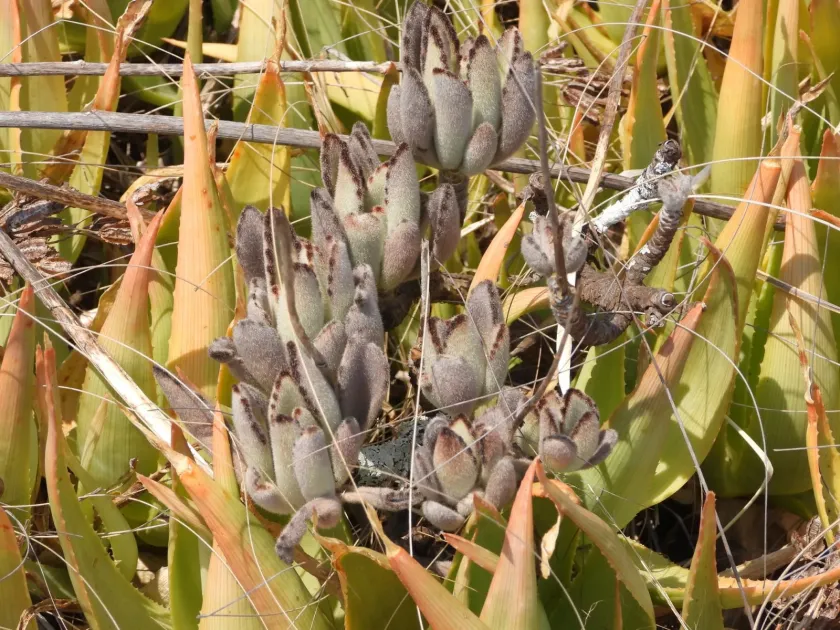
This plant is distinguished by its upright stems and thick, fleshy leaves covered in fine, silvery-white hairs. The leaf margins are marked with dark brown or reddish teeth, creating a striking aesthetic appearance.
As a succulent, it requires bright, indirect sunlight to maintain its compact growth habit. Placing the plant in a spot with partial shade during the peak of summer is advised to prevent sunburn on the foliage.
The soil requirements are strict: the substrate must be highly porous and well-draining. A mix specifically designed for cacti and succulents, containing sand, perlite, and coarse potting mix, is ideal for preventing root rot.
Watering practices should follow the soak-and-dry method. The plant should only be watered when the soil has completely dried out, as excess moisture in the root zone is the primary cause of failure in cultivation.
Main diseases and pests
The Panda plant is susceptible to common succulent pests such as mealybugs, which often colonize the fuzzy surfaces of the leaves and stems, sucking the sap and weakening the plant.
Fungal diseases are a major concern, particularly root rot caused by poor soil drainage or overwatering. Once a fungal infection reaches the root system, it is often difficult to treat, necessitating immediate repotting.
Spider mites can also become a problem in environments with low humidity. Regular inspection of the plant is vital to detect these tiny pests before they cause widespread leaf drop or disfigurement.
Preventative care involves ensuring proper air circulation around the plant, which helps keep the foliage dry and reduces the likelihood of powdery mildew or other mold-related issues.
Using sterile soil and clean pots when repotting significantly lowers the risk of introducing soil-borne pathogens, ensuring the long-term health and growth of the Kalanchoe specimen.