
Kalanchoe millotii
Kalanchoe millotii
Description
Growing requirements
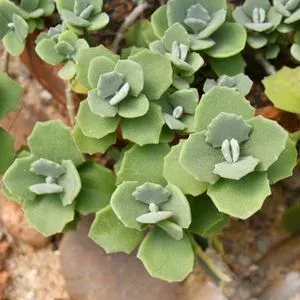
Kalanchoe millotii is a succulent perennial shrub belonging to the Crassulaceae family. It is native to the island of Madagascar, where it naturally adapts to arid, rocky environments through its specialized leaf morphology.
The plant thrives in bright, direct to partial sunlight. Adequate light exposure is essential for maintaining the characteristic compact growth pattern and the silver-grey hue of its distinctive, scalloped-edged leaves.
Regarding soil requirements, this species demands a well-draining substrate. A cactus and succulent mix, enhanced with coarse perlite or pumice, is recommended to ensure optimal oxygen exchange at the root level and prevent water retention.
The ideal temperature range for cultivation is between 20°C and 25°C during the growing season. In winter, the plant benefits from a cooler dormant period, with temperatures kept between 12°C and 15°C to promote flowering potential.
Watering frequency should be determined by the moisture state of the substrate. It is crucial to allow the soil to dry out completely between waterings, as Kalanchoe millotii is highly prone to root rot in saturated conditions.
Main diseases and pests
Mealybugs are the primary pest threat for this species, often clustering in the crevices of the foliage. These pests can cause significant stunting if left untreated and may facilitate secondary fungal infections.
Root rot, caused by excessive moisture or poor drainage, is the most common physiological disorder. It manifests as a rapid softening of the stem base and should be managed immediately by repotting into dry, fresh substrate.
Spider mites may appear in low-humidity environments, damaging the leaf surface. Infestations are typically marked by faint webbing and yellow stippling on the leaves, which significantly reduces the plant's aesthetic appeal.
Preventive measures include regular inspection and ensuring proper air circulation around the plants. Removing dead or decaying leaves helps reduce the habitat available for potential pests and fungal spores.
If chemical intervention is necessary, apply appropriate pesticides cautiously. Due to the fine hairs on the leaves, contact-based treatments should be tested on a small area first to ensure they do not cause phytotoxic damage.