
Kalanchoe prolifera
Kalanchoe prolifera
Description
Growing requirements
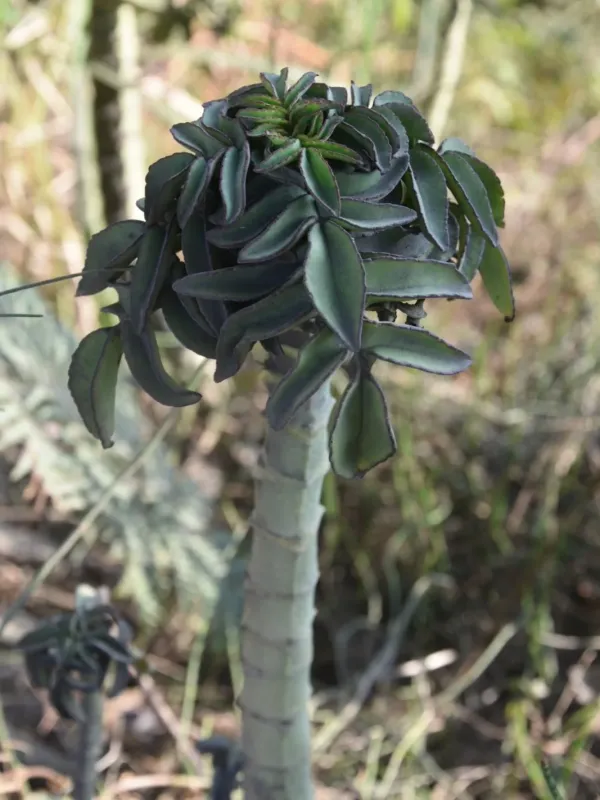
Kalanchoe prolifera is a perennial succulent species belonging to the Crassulaceae family. Native to the island of Madagascar, this plant thrives in tropical climates and is widely recognized for its impressive height and unique architectural foliage structure.
The plant features woody stems and deeply divided, pinnate leaves, which can reach significant lengths. In its natural environment, the plant exhibits a robust growth pattern, often becoming a focal point in tropical landscapes or large-scale conservatories.
Agronomic success for this crop depends heavily on light management; it prefers bright, indirect sunlight to maintain vibrant leaf color without causing leaf scorch. A temperature range between 18 and 25 degrees Celsius is optimal for continuous vegetation.
The soil requirements involve a well-draining, porous substrate, typically consisting of a mix of potting soil, coarse sand, and perlite. A pH balance close to neutral is preferred to ensure proper nutrient uptake by the root system.
Watering must be strictly regulated to avoid waterlogging, which is detrimental to the plant's health. The substrate should be allowed to dry significantly between irrigation cycles, especially during the dormant season, to prevent root hypoxia.
Main diseases and pests
Typical pests affecting Kalanchoe prolifera include mealybugs and spider mites, which can cause severe leaf damage if left unchecked. Early detection through regular crop scouting is essential for preventing infestations in dense plantings.
Fungal pathogens such as grey mold (Botrytis) and root rots pose a significant threat, primarily induced by high humidity levels and inadequate air circulation. Improving ventilation in greenhouse environments is the primary preventative measure.
Chemical control involving systemic insecticides and targeted fungicides is recommended if cultural controls fail. Always ensure that the chemical application is compatible with succulent tissue to avoid phytotoxicity.
The primary economic use of this plant is in the ornamental industry, specifically for indoor landscaping, conservatory displays, and as a botanical specimen in temperate regions. It is prized for its structural presence and ease of propagation.
Propagation is primarily achieved via vegetative methods, specifically using the adventitious plantlets that form along the leaf margins. This trait facilitates efficient mass production in commercial nurseries, reducing the need for seed-based multiplication.