
Kalanchoe synsepala
Kalanchoe synsepala
Description
Growing requirements
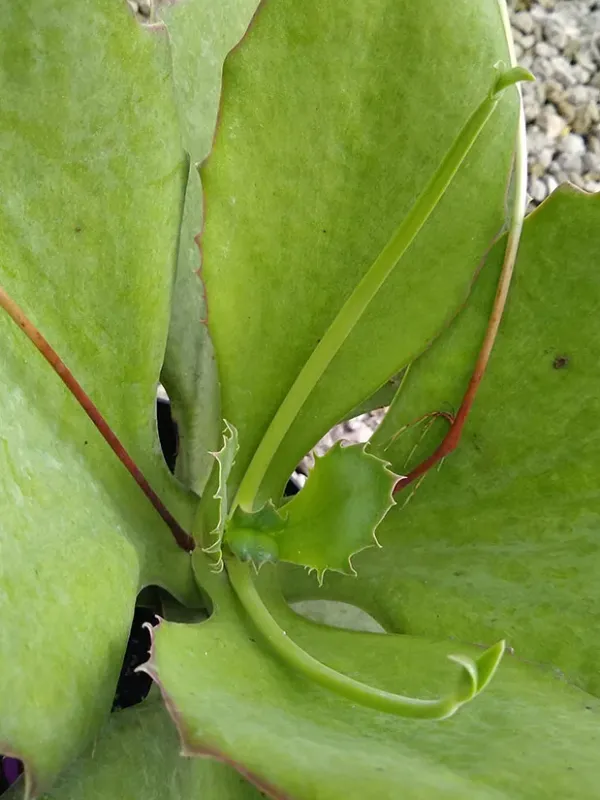
Kalanchoe synsepala is a distinct succulent species within the Crassulaceae family, native to the central highlands of Madagascar. It is biologically characterized by its large, leathery leaves arranged in a tight basal rosette, often with reddish, serrated margins.
Cultivation requires well-draining soil to mimic its rocky native habitat. A mixture designed for cacti and succulents, containing significant mineral components like pumice or coarse grit, is essential to prevent moisture retention at the roots.
The plant thrives under bright, filtered sunlight. Exposure to direct light helps maintain the plant's structural integrity and vivid leaf coloration. In low-light conditions, the species tends to become leggy, losing its characteristic architectural appearance.
Watering practices should follow the soak-and-dry method. During the spring and summer, the soil should be watered thoroughly but allowed to dry out completely between sessions. During the winter dormancy period, watering must be severely restricted.
Economic use of this plant is strictly ornamental, as it is a prized specimen for greenhouse cultivation and indoor plant collections. Its unique ability to produce plantlets on the ends of long stolons makes it highly desirable for propagation and display.
Main diseases and pests
The primary threat to Kalanchoe synsepala is root rot induced by overwatering. It is extremely sensitive to waterlogged conditions, which can lead to rapid decay of the basal tissue and eventual plant mortality if the environment is not corrected immediately.
Pests such as mealybugs can infiltrate the dense leaf rosettes, making them difficult to detect and eradicate manually. Using systemic insecticides or targeted applications of insecticidal soap is recommended to keep these populations under control without damaging the foliage.