
Kalanchoe campanulata
Kalanchoe campanulata
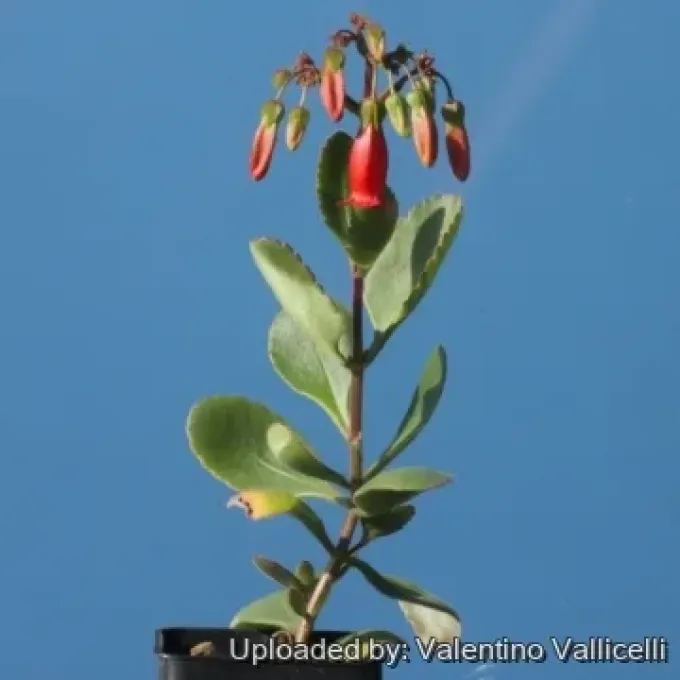
Description
Growing requirements
Kalanchoe campanulata is a succulent perennial belonging to the Crassulaceae family. Native to the unique ecosystems of Madagascar, this species is highly specialized for growth in rocky and arid environments, making it a robust candidate for pot cultivation.
The plant is characterized by its succulent, fleshy leaves that demonstrate high water-retention capacity. The most notable feature is its bell-shaped flowers, which hang gracefully from the stalks, distinguishing it from other species within the genus.
Successful cultivation requires a bright, airy environment with plenty of indirect sunlight. While it can tolerate some direct sun during the cooler parts of the day, protection from the scorching noon sun is essential to prevent tissue damage and scorching.
The substrate must be highly porous and fast-draining. A typical agricultural mix includes coarse sand, perlite, and a small amount of potting soil to provide necessary aeration, preventing root suffocation and standing water buildup.
Temperature management is crucial: the plant thrives in a range of +20°C to +25°C during the growing season. A cooler dormant period with temperatures around +15°C is beneficial for promoting flower bud development and overall plant vitality.
Main diseases and pests
The most common threat to Kalanchoe campanulata is root rot, which typically stems from overwatering or inadequate soil drainage. This condition manifests as blackened, mushy stem bases and requires immediate repotting into dry substrate.
Mealybugs are the primary pest concern, appearing as cottony white masses in the leaf axils. If left untreated, they can severely weaken the plant and facilitate the growth of sooty mold, which impairs photosynthesis.
Aphids may target the delicate flower spikes, leading to stunted bloom development and distorted growth. Early identification through routine inspection of the inflorescences is the best control measure for large-scale production.
Poor ventilation combined with high humidity creates an environment conducive to powdery mildew. This fungal disease appears as a white, dusty coating on the leaves and can be mitigated by improving air circulation and applying fungicide sprays.
Nutrient imbalances, particularly nitrogen excess, can lead to overly succulent, soft growth that is more susceptible to disease and pest infestation. A balanced, low-concentration fertilizer should be applied only during the active growth phase.